


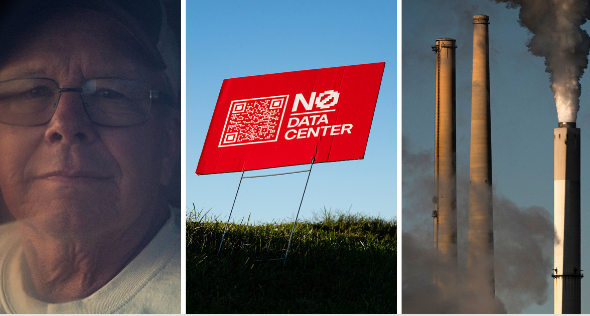
- In March in Mason County, Kentucky, Dr. Timothy Grosser was offered $10 million to sell his 250-acre farm — 35 times the purchase price in 1988. The buyer was anonymous, only stating they were a “Fortune 100 company,” and required him to sign a Non-Disclosure Agreement (NDA) before revealing more. Grosser refused to sell.
- Five months later, officials confirmed the area was being surveyed for the construction of an AI data center. This is a typical example of the wave of multi-billion dollar, anonymous projects, as Amazon, Google, Microsoft, Meta, xAI, etc., require farmers and local authorities to sign NDAs to keep the location and scale secret.
- NBC News investigated 30 projects in 14 states: most local governments signed NDAs and worked with shell companies, leaving residents unaware of who is building what in their community.
- Data centers consume massive amounts of water and electricity, causing noise and air pollution. For example, xAI in Memphis uses methane gas turbines that emit formaldehyde; Loudoun (Virginia) – the “data center capital of the world” – faces resident protests due to “continuous humming.”
- Many communities have revolted: St. Charles, Missouri canceled the 440-acre “Project Cumulus”; Pima County, Arizona canceled Amazon’s $3.6 billion “Project Blue” after information was leaked.
- In Kentucky, 18 out of 20 landowners signed contracts to sell for $60,000/acre with confidentiality clauses, raising concerns among residents about losing agricultural land, increased electricity bills, and pollution.
- According to research in Virginia, 80% of 31 data center projects were bound by NDAs, with many contracts lasting years and allowing the company to prevent information disclosure under the Freedom of Information Act.
- In Minnesota, the environmental group MCEA sued cities for hiding data projects, arguing they were “evading environmental laws” by misrepresenting the projects as small commercial areas.
📌 AI corporations like Amazon, Microsoft, or xAI are using Non-Disclosure Agreements to conceal data center projects, leaving residents unaware of what they are living next to. With projects consuming up to 2.2 gigawatts of electricity and millions of liters of water, this “secrecy for competition” strategy is trading community trust and the living environment for the speed of AI expansion.
