


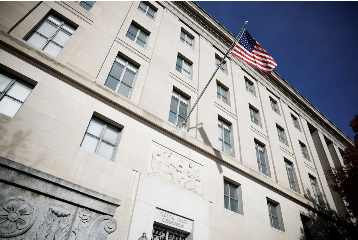
- The US Federal Trade Commission (FTC) opens a new chapter in its approach to AI law enforcement, aligning with the second Trump administration’s priority of promoting AI.
- On December 22, 2025, the FTC vacated a final order against Rytr, an AI company, citing that the old decision imposed an “unnecessary burden” on AI innovation.
- Previously, the FTC accused Rytr of enabling users to generate mass fake reviews, potentially deceiving consumers and causing unfair competition.
- The vacating of the Rytr order shows the FTC is sharply reducing enforcement related to the capabilities of AI products themselves, even when there is a risk of misuse.
- Instead, the FTC pursues a “two-pronged” strategy: loosening restrictions on AI’s technical capabilities, but continuing to crack down on false claims about AI capabilities.
- This approach closely follows Section 5 of the FTC Act regarding deceptive advertising.
- The new policy stems from President Donald Trump’s January 2025 Executive Order, affirming the goal of maintaining US global AI leadership.
- The July 2025 AI Action Plan requires the FTC to review and suspend investigations or penalties that “impede AI innovation.”
- The FTC is currently initiating almost no new cases targeting AI capabilities, a move rarely seen in two decades.
- However, cases of AI hype are still being handled: accessiBe was fined $1 million; Click Profit faced a penalty of over $20 million; Workado was forced to prove AI effectiveness.
- FTC Chairman Andrew N. Ferguson emphasized that AI cannot be considered illegal simply because of its potential for misuse.
- The FTC continues to investigate sensitive areas such as chatbots affecting children and deepfakes under the Take It Down Act.
📌 The US Federal Trade Commission (FTC) is shifting to a “selective and pragmatic” approach to AI regulation: reducing intervention in the technology itself to avoid stifling innovation, but tightening control over false advertising claims. This is in implementation of President Trump’s Executive Order in the July 2025 AI Action Plan requiring the FTC to review and suspend investigations or penalties that “impede AI innovation.” The cancellation of the investigation order against Rytr shows that the FTC is sharply reducing enforcement related to the capabilities of AI products themselves, even when there is a risk of misuse. Previously, the FTC accused Rytr of enabling users to generate mass fake reviews, potentially deceiving consumers and causing unfair competition. The FTC continues to investigate sensitive areas such as chatbots affecting children and deepfakes.
