


Anti-AI sentiment in the United States is rising very rapidly, creating a new political and social crisis for the tech industry.
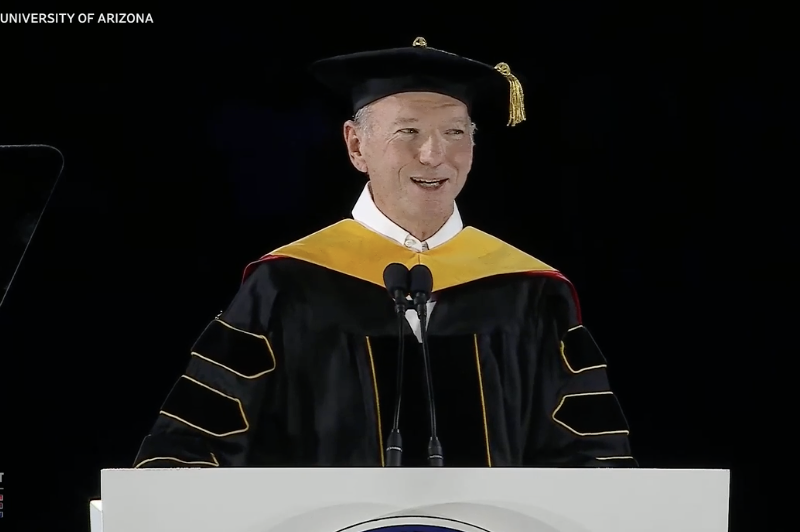
Former Google CEO Eric Schmidt was booed by students while speaking about AI at the University of Arizona graduation ceremony.
Many recent surveys show that the majority of Americans are concerned about AI rather than excited about this technology.
Citizens are dissatisfied because electricity prices are rising due to the boom of AI data centers.
Workers fear AI will cause mass job losses, while parents worry AI will affect children’s education and mental health.
The backlash wave has led to protests, impacted election results, and even caused isolated incidents of violence.
A 20-year-old Texas man was accused of throwing a petrol bomb into OpenAI CEO Sam Altman’s home and threatening the company’s headquarters in San Francisco.
In Indianapolis, a city councilor was shot 13 times after approving a data center project.
Researcher Gregory Ferenstein noted that the speed of negative reaction to AI is “unprecedented.”
Only about 30% of Democratic voters want the US to accelerate AI as fast as possible, much lower than the 77% of tech founders.
AI is currently the political issue growing fastest in terms of interest among 39 topics tracked by Blue Rose Research.
In Festus, Missouri, voters ousted 4 city councilors just one week after they approved a 6-billion-USD data center.
Around 360,000 Americans are currently participating in Facebook groups opposing data centers, a fourfold increase compared to December 2025.
At least 48 data center projects worth about 156 billion USD were delayed or blocked last year due to local opposition.
The first quarter of 2026 alone saw a record 20 data center projects canceled due to community backlash.
Texas Agriculture Commissioner Sid Miller called for a halt on hyperscale data center development due to concerns over power grid strain and costs for farmers.
SemiAnalysis CEO Dylan Patel noted that AI is currently “less popular than ICE and politicians.”
Artists and environmental communities oppose data centers due to massive electricity consumption and the risk of replacing creative labor.
Tennessee politician Justin Pearson is making opposition to xAI’s data center a focus of his election campaign.
The NAACP has sued xAI for operating gas turbines for its data center without valid permits.
AI companies are currently spending hundreds of millions of dollars on mid-term elections to counter the backlash wave.
OpenAI claims that the media and “doomers” are fueling AI fears with negative scenarios.
The tech industry admits there is a large gap between what they say about AI benefits and what communities actually experience.
📌 Conclusion: The US AI industry is facing an unprecedentedly strong social reaction as data centers, electricity prices, the environment, and job losses become real political issues. From the booing of Eric Schmidt to protests against xAI and the cancellation of billion-dollar projects, AI is shifting from a symbol of innovation to a source of public concern. The fact that at least 48 data center projects worth 156 billion USD were blocked shows that the AI battle is no longer just about technology, but has become a conflict over energy, economy, and social trust.
