


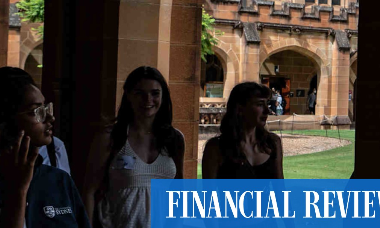
- Thousands of University of Sydney staff will hold a 24-hour strike to demand stronger job security amidst concerns over AI.
- The university has recommended that faculty and students work and study from home, shifting classes online where possible.
- Negotiations between the National Tertiary Education Union (NTEU) and the leadership regarding a new enterprise agreement have reached a deadlock.
- A primary cause is the impact of AI on employment and the future of higher education.
- The union argues for the protection of public interest and the traditional role of universities in the long term.
- The NTEU is demanding a 20% pay rise over three years, increasing superannuation contributions for casual staff to 17%, and higher redundancy payouts for professional staff.
- The union proposes that all major changes driven by AI must be regulated within the enterprise agreement.
- Staff should be consulted even on minor AI-related changes and provided with training when new AI systems are deployed.
- The union also demands a ban on automated systems operating without human oversight.
- The university claims the strike is premature and will not affect the outcome of negotiations.
- The University of Sydney has added an “AI use” section to course outlines to regulate the permitted level of AI usage.
- The union states that staff have not received clear guidance on AI implementation, while workloads have increased.
- The university’s move to use AI avatars in teaching has raised fears that lecturers will gradually be replaced.
- The institution asserts that AI must be implemented in a human-centric way, investing in training and safeguards for privacy, ethics, and academic integrity.
- Leadership argues that AI regulations should be managed through flexible policies rather than being fixed in a three-year enterprise agreement.
📌 The strike at the University of Sydney reflects a new trend in higher education: labor disputes are no longer just about pay and benefits but are directly linked to AI. Faculty want legal commitments regarding AI use, training, and human oversight, while the university prefers implementing technology through policies that can be updated frequently to adapt to the pace of AI development.
