


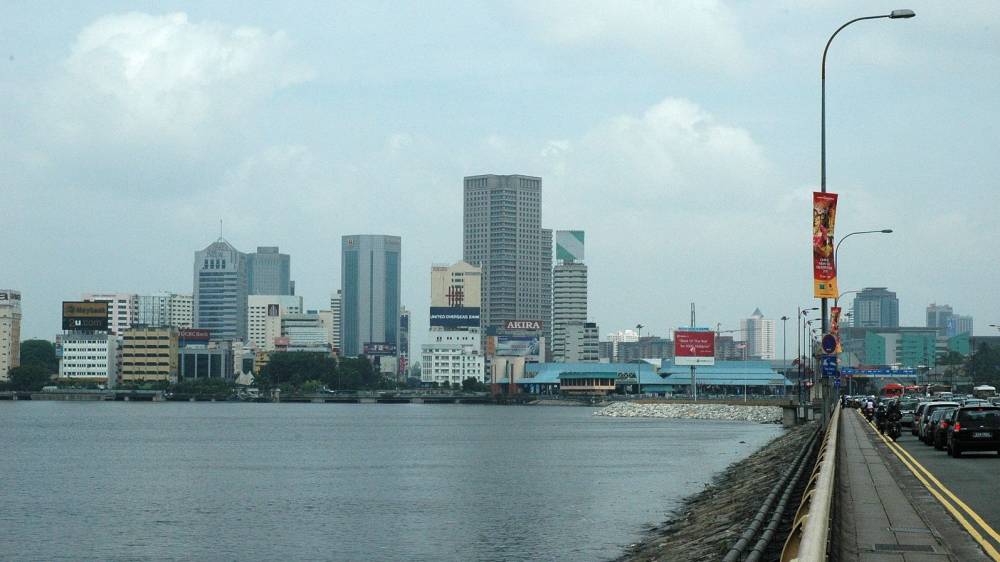
- Johor (Malaysia) has become the fastest-growing data center hub in Southeast Asia, attracting Google, Microsoft, and ByteDance thanks to cheap land, proximity to Singapore, and government incentives.
- Current capacity: 580 MW, but projected capacity (including projects under development) reaches 5,800 MW, enough to power 5.7 million households per hour (according to DC Byte).
- Kenanga Investment Bank forecasts that by 2035, electricity consumption for data centers in Malaysia will account for 20% of the country’s total power generation capacity.
- Malaysia plans to add 6-8 GW of gas-fired power to meet demand, while coal-fired power still accounted for 43% in 2023. This could conflict with the 2050 net-zero target.
- Regarding water: a 100 MW center requires about 4.2 million liters/day for cooling, equivalent to the needs of thousands of residents. Johor has built 3 new reservoirs and water treatment plants, and has applied higher water tariffs for data centers.
- The industry once caused Johor to import water from Singapore, raising concerns about resource security. The Malaysian government is calling for a shift to recycled water and waterless cooling data centers.
- Global picture: according to the IMF, global electricity consumption by data centers in 2023 was equal to that of Germany and France. Some studies predict that by 2027, AI could consume 4-6 times more water than Denmark.
- The US – the largest data center market – expects electricity bills to increase by 8% and CO₂ emissions by 30% by 2030 due to AI and cryptocurrency mining.
- Singapore imposed a 3-year moratorium on data centers (2019-2022), then introduced the “Green Data Centre Roadmap”. Growth is now constrained, leading to a shift to Johor.
- Malaysia is preparing to launch a “Sustainable Data Centre Framework” in October 2025, while also expanding renewable energy and researching nuclear power.
📌 Johor, Malaysia is booming with a future of 5,800 MW of data center capacity, which could consume 20% of Malaysia’s electricity by 2035. A 100 MW center requires about 4.2 million liters/day for cooling. The government is investing in new reservoirs, applying high water prices, and promoting recycling, but still faces the risk of conflicting with its 2050 net-zero target. The industry once caused Johor to import water from Singapore, raising concerns about resource security. The Malaysian government is calling for a shift to recycled water and waterless cooling data centers. Malaysia is preparing to launch a “Sustainable Data Centre Framework” in October 2025, while also expanding renewable energy and researching nuclear power.
