


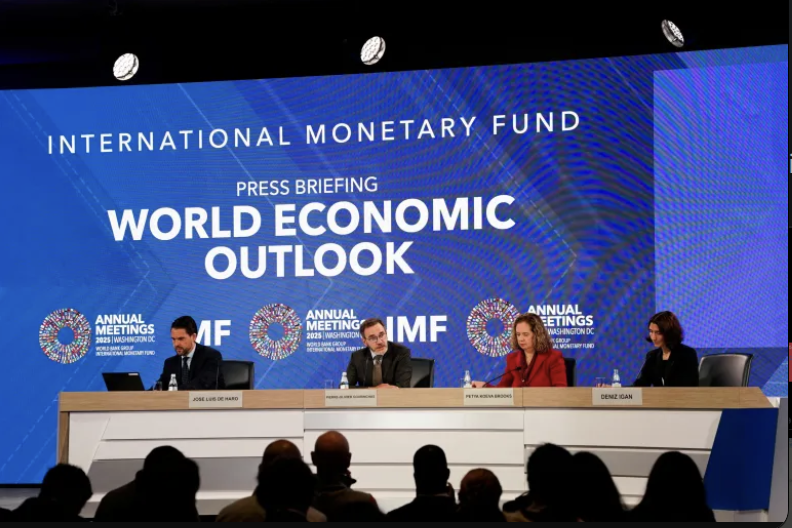
The International Monetary Fund (IMF) has warned that the surge in artificial intelligence (AI) investment in the US is showing signs of a bubble similar to the dot-com era, although a potential “burst” is unlikely to cause a systemic financial crisis.
IMF Chief Economist Pierre-Olivier Gourinchas stated that while the wave of AI investment is boosting US and global economic growth, market valuations may be outpacing actual performance.
He emphasized that, unlike the 2008 real estate bubble, this surge is not debt-driven but is largely financed by cash-rich tech corporations, reducing the risk of contagion through the banking system.
Currently, tech companies are spending hundreds of billions of dollars on AI chips, data centers, and computing infrastructure, yet the productivity gains have not yet clearly materialized in the economy.
According to IMF data, AI-related investment has increased by less than 0.4% of US GDP since 2022, whereas the dot-com bubble saw an increase of up to 1.2% of GDP between 1995 and 2000.
The IMF warns that a market correction in AI could erode confidence and put non-bank financial institutions under liquidity pressure, even if it does not cause a direct crisis.
The IMF’s World Economic Outlook report suggests that growth in 2025 is supported by AI investment, lower-than-expected interest rates, and a weaker US dollar, but these factors also contribute to sustained high inflation.
The IMF forecasts a slower decline in US inflation: 2.7% in 2025 and 2.4% in 2026, instead of returning to the previously expected 2% target.
Factors keeping inflation high include reduced immigration (labor shortages) and the delayed impact of the Trump administration’s tariffs; the IMF notes that most of the import tariff costs are being borne by US companies, not foreign exporters.
📌 The International Monetary Fund (IMF) views the AI investment craze as a “catalyst” helping the US economy avoid a recession. However, this bubble—though smaller than the dot-com era (0.4% of GDP vs. 1.2%)—still carries the risk of a sharp correction. If it bursts, the consequences would primarily be shareholder capital losses rather than a banking crisis,but global growth and market sentiment could be significantly damaged.
