

- Google has just launched Nano Banana, an AI image editing model from the Gemini family, touted as superior to rivals like OpenAI’s ChatGPT and Elon Musk’s Grok.
- While the tech community celebrates the tool’s release, artists are strongly protesting on social media, especially on the platform X (formerly Twitter).
- The main concerns are that Nano Banana can:
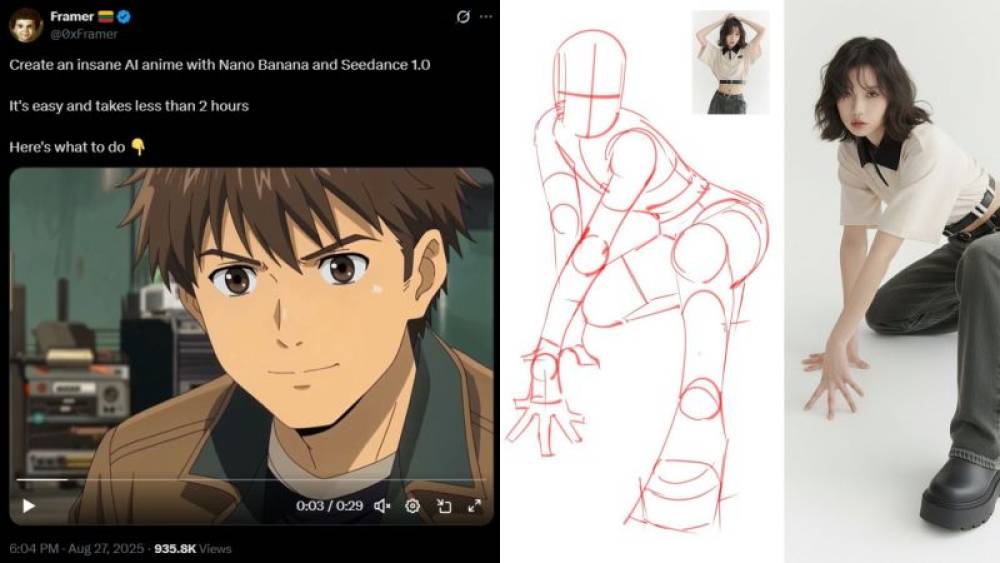
- Create basic sketches from an existing template.
- Interpret poses and emotions from a single illustration.
- Replicate comic book panels in a specific artist’s style – without their consent.
- An X user nicknamed -Zho- shared examples, using a drawing from Pinterest to create a highly accurate realistic image of an Asian woman, with only minor issues in the facial angle.
- The art community reacted fiercely because AI is infringing on copyright and devaluing creative labor.
- Artists spend years honing their drawing skills, studying human anatomy, perspective, and learning from their idols. Having their work used to train AI without permission is seen as insulting.
- AI models like Nano Banana cannot generate images without accessing millions of artworks available online – often without permission.
- Artists are particularly concerned about their future careers, especially in the video game and animation industries, which are aggressively cutting costs and laying off staff to be replaced by AI tools.
- The debate between art and generative AI is escalating, with Nano Banana being seen as the last straw.
📌 Google’s Nano Banana is sparking a wave of protest from artists worldwide as this AI tool can replicate works without permission, thereby threatening creative professions. Its ability to create sketches, interpret poses, and mimic individual styles has artists worried about being replaced. Amid cost-cutting and mass layoffs, Nano Banana is not just a tool – it is a symbol of technology’s encroachment on human creativity.
