



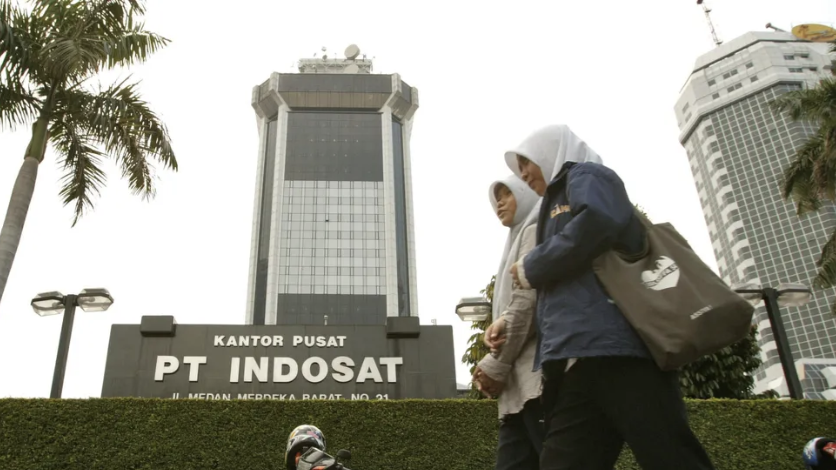
According to an investigation by the Wall Street Journal, Chinese startup INF Tech, based in Shanghai, gained legal access to 2,300 Nvidia Blackwell (GB200) AI GPUs banned from sale to China by renting compute capacity from the Indonesian telecommunications company Indosat Ooredoo Hutchison.
- INF Tech specializes in developing AI applications in finance and healthcare, founded by Qi Yuan – a Chinese-American citizen and Dean of Fudan University’s AI Institute. Fudan University is suspected of being involved in the negotiation process of the contract between INF Tech and Indosat.
- The transaction chain began in the US: Nvidia sold Blackwell chips to Aivres, an AI server manufacturing partner. Aivres is based in California and is suspected of having ties to Inspur – a Chinese conglomerate previously placed on the US Entity List for cooperating with the Chinese military. However, because Aivres is a US company, they remain lawful if they comply with export regulations.
- Aivres subsequently sold 32 Nvidia GB200 server racks (each containing 72 GPUs) to Indosat, totaling approximately $100 million, equivalent to 2,304 Blackwell GPUs. This system was installed in Jakarta in October 2025.
- Indosat had previously signed a contract with INF Tech as a Chinese client – before purchasing the equipment from Aivres. According to sources, INF Tech uses Indosat’s server rental service to train AI remotely, which is legal because it does not directly import the US hardware.
- Neither INF Tech, Indosat, nor Fudan University is on the Entity List, so the transaction does not violate US law, although it causes political controversy by opening a path for China to access US GPUs through a third country.
- Experts warn that banned companies could use the “cloud leasing” loophole to bypass export controls. If Beijing forces enterprises to cooperate with the state, training data or models could be indirectly transferred to the Chinese government.
- The Biden administration previously proposed the “AI Diffusion Rule” to prevent this scenario, but President Trump did not implement it, arguing that the regulation would slow down innovation.
- Nvidia confirmed that the export process was legal and fully compliant with regulations. The company argues that excessive restrictions by the previous administration “have caused the US to lose its competitive advantage and tens of billions of dollars in losses.”
- Indosat CEO Vikram Sinha stated that the company “works with global customers, including the US and China, provided full compliance with international regulations.”
📌 Summary: The case of Chinese startup INF Tech renting 2,300 Blackwell GPUs via Indonesian telecom operator Indosat exposes a major loophole in US AI export controls: China can access advanced hardware through third-party cloud infrastructure. Although the transaction is legal on paper, experts worry that this is a “new model for circumvention,” allowing Chinese companies to train next-generation AI without directly owning the banned hardware.


