

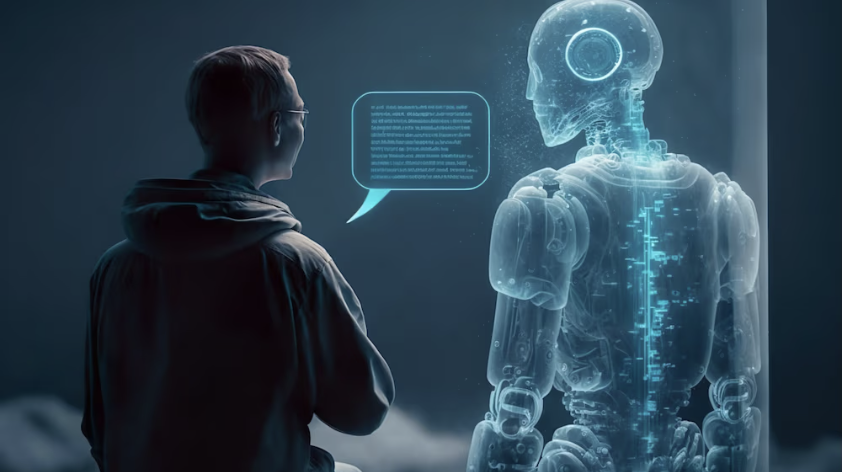
- SAP conducted an internal experiment with five consulting teams, asking them to validate over 1,000 business requirements executed by the AI Joule for Consultants. Four teams were informed that the results came from interns and rated the accuracy at 95%. The fifth team was told it was AI — they rejected most of the results, despite the data being identical. Upon closer validation, they found the AI also achieved 95% accuracy.
- Guillermo B. Vazquez Mendez, Chief Architect at SAP America, stated that the crucial lesson is the need for caution in how AI is introduced to expert teams, as cognitive bias can lead them to reject accurate results.
- AI Joule does not replace humans but increases the efficiency of working time: it eliminates administrative tasks, allowing experts to focus on deep analysis and customer strategy.
- Previously, consultants spent 80% of their time on technical systems; AI helps to “reverse the ratio” — focusing more on industry understanding, business goals, and final outcomes.
- For newcomers, AI Joule becomes a learning “bridge”: it helps them become self-reliant, while senior experts focus on strategy. Using prompt engineering techniques (e.g., asking the AI to act as a Senior Architect in SAP S/4HANA 2023) helps the output be clearer and more structured.
- SAP views AI as the starting point towards agentic AI, where the system not only responds to commands but also understands processes, identifies points requiring human intervention, and handles the rest autonomously. With over 3,500 business processes mapped by SAP and $7.3 trillion in global commerce running on the SAP platform, their AI has a strong foundation to evolve into an intelligent autonomous system.
📌 Summary: An internal experiment by SAP revealed an “anti-AI bias” among experts, showing that the biggest barrier is not technological but psychological. When AI like Joule achieves 95% accuracy and reduces weeks of manual work, the future of the 2030 consultant will be human – augmented by AI, not replaced by it.
