


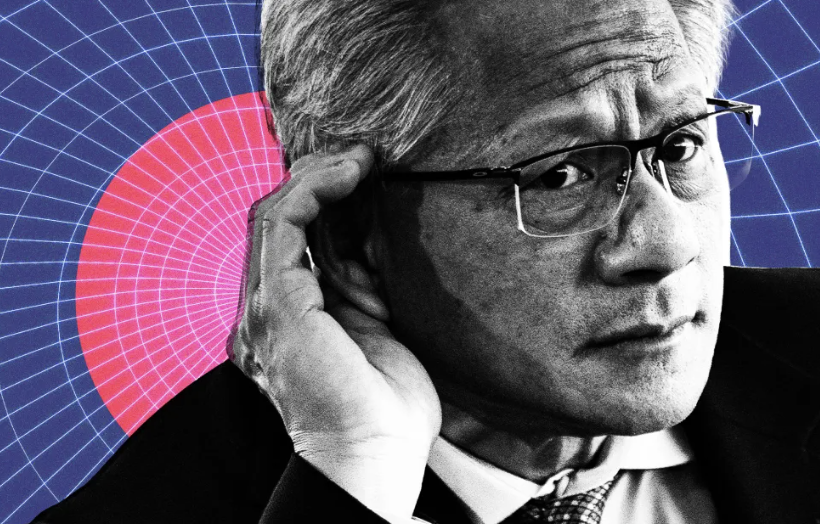
Speaking at the U.S.–Saudi Investment Forum in Washington D.C., Jensen Huang, CEO of Nvidia, argued that instead of causing unemployment, AI will fundamentally change the nature of work and lead people to work more. He said: “Every job will be different. When you become more productive and the hard stuff becomes easy, you will have more time to pursue more ideas.”
Huang cited the example of radiologists—thanks to AI, they can now process more images than ever before. However, the reality suggests that the productivity gain is largely driven by a severe labor shortage, which AI companies are leveraging for massive profits.
In contrast to Huang’s vision, Elon Musk (Tesla, SpaceX), also present at the event, suggested that in the future, “work will only be a choice”—like playing sports or growing vegetables in a garden. He analogized: “You can go to the store and buy vegetables or grow them yourself at home—work will be like that.”
But Huang countered: “We will be more productive, but also busier because there are too many ideas. I guess Elon will also be busier because of AI, and so will I.”
The Nvidia CEO’s remarks drew attention because they contradict the common promise from the tech industry that “AI will help people work less and enjoy more.” Instead, Huang predicts AI will stimulate a creative explosion, forcing humans to engage in more intellectual labor in a fiercely competitive world.
Scholars warn that without economic reform, the combination of mass automation and monopolistic capitalism could create severe inequality—where the wealthy, like Musk and Huang, remain “fine,” while ordinary workers might be swept into an endless cycle of overwork.
Huang’s view that “AI makes us work more” reflects the current corporate reality: increased productivity does not come with rest but transforms into higher creative pressure and expectations.
📌 Jensen Huang, CEO of Nvidia, said: “Every job will be different. When you become more productive and the hard stuff becomes easy, you will have more time to pursue more ideas.” Huang’s statement suggests the AI era is not a time for rest, but an age of acceleration: machines bear the heavy lifting, and humans bear the creative burden. AI may free up time, but it simultaneously unlocks an infinite number of new ideas, forcing people to work harder to avoid falling behind. As Huang himself said, “AI doesn’t replace you—it makes you better than yourself, and work harder than ever.”
