


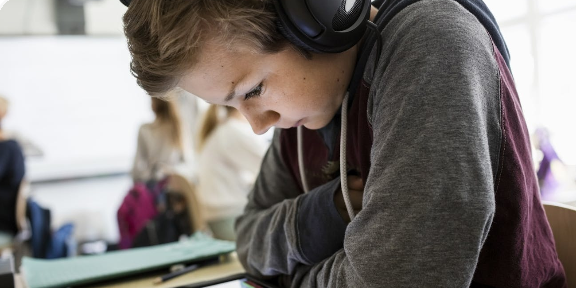
- The “one chatbot per child” vision in the classroom is supported by many tech leaders, with the idea of a personal AI tutor following each student throughout their development.
- Some major US school districts like Houston and Miami have signed expensive contracts to deploy AI for thousands of K-12 students, amidst declining enrollment and pressure to cut costs.
- The tech industry and both US political parties are pushing for AI in education, seeing it as a potential market after investing billions of dollars in generative AI.
- However, learning science research shows that learning is inherently a social process, not just an individual cognitive activity.
- Neuroscience research indicates that social relationships affect gene expression, thereby impacting brain development and learning ability.
- In the classroom, discussion, debate, and listening to peers help enhance brain health and learning outcomes.
- A 1991 study of over 1,000 high school students showed that classrooms with high-quality discussion helped students achieve significantly better results.
- There is currently insufficient scientific evidence regarding the long-term impact of generative AI on K-12 students.
- Current studies are limited, focusing on older students and mainly measuring grades, ignoring social and psychological factors.
- Critical questions remain unanswered: How does AI affect mental health, teacher-student relationships, peer relationships, and educational inequality?
- Education is not just about learning knowledge but also learning how to become citizens who know how to dialogue and live together in society.
- AI personalization can be useful, but if it overshadows human-to-human interaction, it risks isolating children in the classroom.
📌 Warning that the premature adoption of the “one student, one chatbot” model may contradict decades of educational research. Learning science research shows that learning is inherently a social process, not just an individual cognitive activity. In the classroom, discussion, debate, and listening to peers help enhance brain health and learning outcomes. Technology should only support, not erode, the foundations of social learning and the holistic development of children.
