


- AI is a major driver of the S&P 500 and the U.S. economy, with a few AI CEOs becoming “stars,” blurring the line between expectation and reality.
- President Trump has vowed to do “whatever it takes” to lead the world in AI, utilizing industrial policy, opening federal lands for data centers and power plants, and accelerating licensing and environmental reviews.
- The U.S. administration has invested capital in Intel, x-Light, and critical mineral companies serving the chip and electronics supply chain for AI.
- Many data center components like servers, chips, and circuit boards are exempt from tariffs—accounting for about 1/3 of data center costs—but construction materials are still taxed.
- 2025 tariffs have significantly increased equipment and material costs, especially for steel, aluminum, and copper wire, which face penalties of up to 50%.
- Power storage batteries for the grid are mostly imported from China, thus subject to higher taxes, driving up electricity costs.
- McKinsey forecasts that new data centers from now until 2030 will require over 600 terawatt-hours of electricity, equivalent to the power for nearly 60 million households.
- Compute power is expected to double or more by 2030, causing electricity and infrastructure demand to skyrocket.
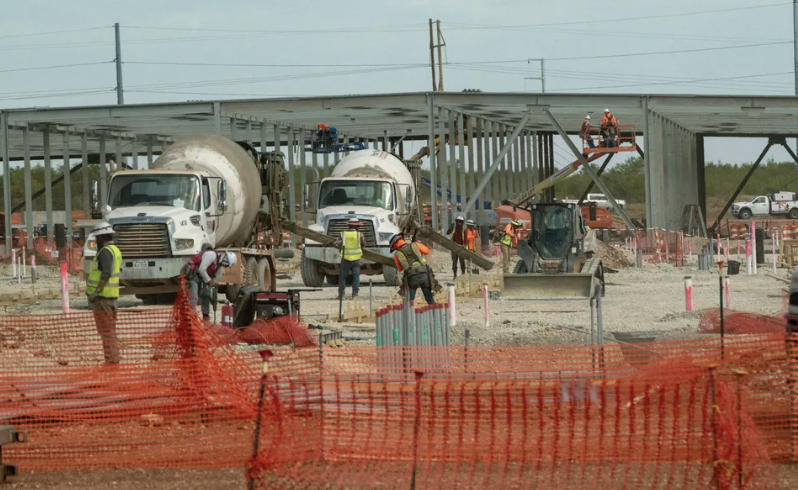
- Construction labor shortage is a major bottleneck: 25% of construction workers are foreign-born, and 1/7 are undocumented.
- Tightened immigration policies, ICE raids, and deportations have delayed many projects; over 80% of contractors report labor shortages.
- Labor shortage is the number one cause of project delays, amid a nearly 10% drop in new housing and a 13% drop in commercial construction.
- Hundreds of billions of dollars in AI and data center CAPEX are “buying less,” and this situation could worsen in 2026.
- The U.S. government may also promote housing construction, increasing labor competition for AI projects.
- The author argues the government should focus not just on AI engineers, but also on electricians, welders, and HVAC technicians.
- Proposed solutions include expanding H-2B visas, accelerating EB-3 for the construction industry, and creating specific temporary visas for construction workers.
📌 Conclusion: AI is a major driver of the S&P 500 and the U.S. economy, with a few AI CEOs becoming “stars.” AI may still succeed technologically, but cost and time are becoming decisive barriers. With power demand rising by over 600 terawatt-hours by 2030, high tariffs and labor shortages are making data centers expensive and delayed. Hundreds of billions in investment are no longer as effective as expected. If immigration policies are not eased and the skilled labor shortage is not addressed, it may be tariffs and immigration—rather than technology or China—that cause the AI bubble to deflate.
