



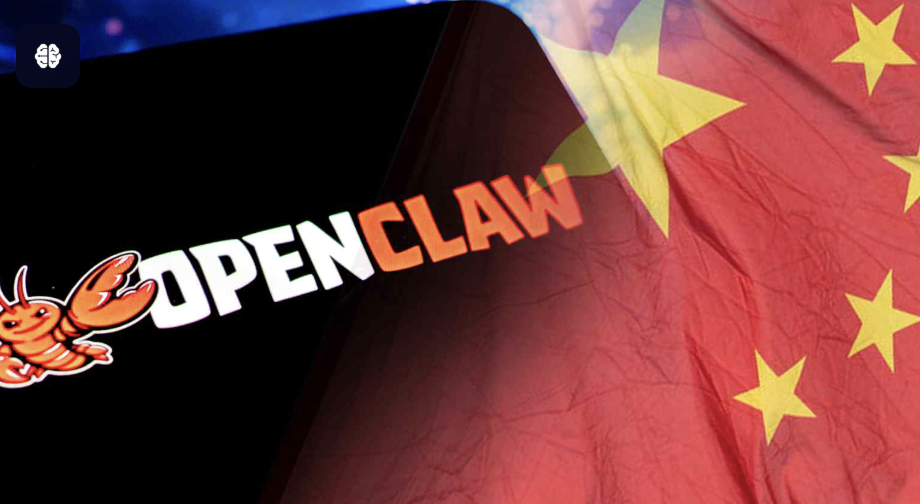
- Chinese AI companies, from tech giants to startups, are rapidly developing their own versions of OpenClaw, an open-source Western AI agent application currently trending in the Chinese tech community.
- OpenClaw allows users to control computers using natural language, performing tasks through connections with Large Language Model (LLM) APIs.
- The tool was created by Austrian developer Peter Steinberger and gained rapid popularity before he joined OpenAI, the creator of ChatGPT.
- The OpenClaw system is not tied to a specific AI model but consumes a large volume of tokens during operation.
- This has significantly boosted demand for low-cost Chinese AI models like Kimi, MiniMax, and Zhipu AI’s GLM on OpenRouter, an API platform providing access to hundreds of AI models.
- In late February, the token usage of Chinese models on OpenRouter surpassed that of U.S. models for the first time.
- However, installing OpenClaw on personal computers is complex, leading many services in China to offer on-site installation for around 499 RMB (approx. $72.5).
- To capitalize on this trend, Chinese companies are launching user-friendly versions with “one-click” installation capabilities.
- Zhipu AI launched AutoClaw, which supports direct integration with ByteDance’s Feishu productivity tool, causing the company’s stock to rise over 20% in Hong Kong.
- Tencent introduced WorkBuddy, dubbed “Tencent’s version of OpenClaw,” which can be set up on a smartphone in about one minute.
- Xiaomi also released Miclaw, an AI agent app running on smartphones, while Baidu and Moonshot AI are providing cloud-based OpenClaw deployment solutions.
- Meanwhile, the Chinese government warns that OpenClaw could pose security risks such as prompt injection attacks, system information leaks, accidental deletion of critical data, or malicious plugins with backdoors.
- Despite security concerns and U.S. AI chip restrictions, Beijing still considers AI a strategic industry and has included “embodied AI” in the 2026-2030 five-year economic development plan.
📌 Conclusion: The OpenClaw wave has triggered intense competition among Chinese AI firms like Tencent, Zhipu, Baidu, and Xiaomi. They are developing AI agent versions that are easy to install and use domestic models to mitigate data risks. While the government warns of security threats like prompt injection and system leaks, market demand remains strong with 499 RMB (~$72.5) installation services, and token usage for Chinese AI models has surpassed U.S. models for the first time.


