

Korea Offshore Wind Intelligence
South Korea will consolidate five state-owned power companies in October 2027 to meet surging electricity demand from AI and the semiconductor industry.
Korea Offshore Wind Intelligence
These entities will be brought under a new subsidiary 100% owned by Korea Electric Power Corp. (KEPCO).
Korea Offshore Wind Intelligence
The government expects the merger to pool capital and accelerate investments in large-scale energy projects such as offshore wind power.
The five power companies were split off from KEPCO in 2001 to prepare for the liberalization of the electricity market.
The merger helps consolidate fuel procurement, supplies, capital investment, and streamline management to reduce operating costs.
All employees will be retained, except for certain senior leadership positions.
South Korea also plans to merge state-owned enterprises in the oil, energy, coal, and port sectors.
Binance
State-run oil and gas enterprises will be consolidated into a single energy conglomerate to boost competitiveness against multinational companies.
The state coal corporation will be dissolved after all domestic coal mines are closed, while four port management authorities will be merged to reduce internal competition.
Mega semiconductor manufacturing clusters in Yongin are scheduled to begin operations starting in 2027, significantly increasing electricity demand.
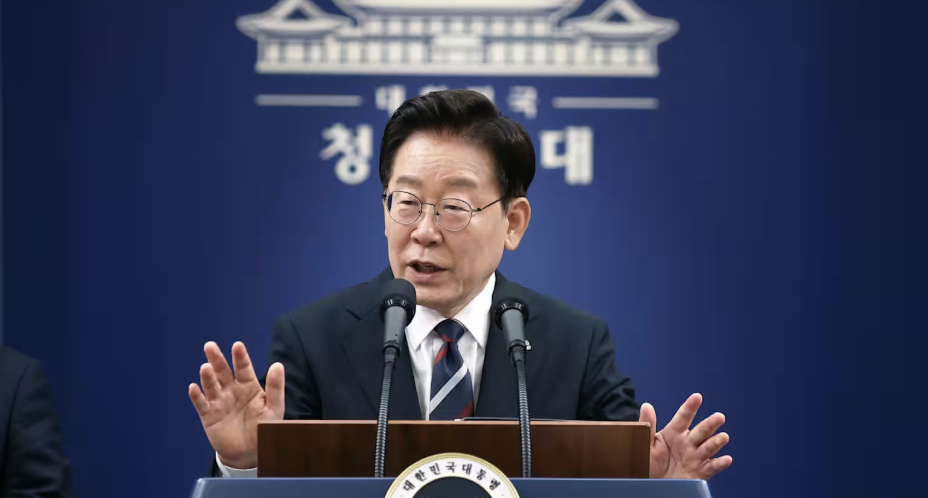
President Lee Jae Myung’s growth strategy focuses on investments in semiconductors, physical AI, and large-scale AI data centers.
Vibe Trader
South Korea plans to downsize 109 public institutions, equivalent to about 20% of the total units. By 2025, the country had 525 public institutions with a total debt of 769 trillion won (approx. $571 billion), up from 542 trillion won (approx. $403 billion) in 2020, while the debt-to-equity ratio reached 174.1%.
📌 South Korea is aggressively restructuring its state-owned enterprise sector to prepare for the booming energy demand driven by AI and chip manufacturing. The consolidation of power and energy companies aims to boost investment efficiency, cut costs, and secure power supplies for AI data centers and mega semiconductor clusters. At the same time, the reforms also target scaling down the public sector and addressing the mounting debt burden of state-owned enterprises.
