


China is rapidly closing in on the U.S. in the race to develop artificial intelligence, especially at the AI model layer – a critical part of the technology stack.
According to Stanford’s AI Index Report 2024, the U.S. has 40 prominent AI models, China has 15, and Europe only 3. Although the U.S. still leads in quantity, the quality gap is shrinking rapidly.
In 2023, U.S. models outperformed Chinese ones by 17.5% in the MMLU (Massive Multitask Language Understanding) test. By 2024, that gap dropped to just 0.3%. In the advanced language understanding test (MMLU-Pro), China’s DeepSeek-R1 even surpassed all American models.
Performance in programming accuracy (SWE-Bench) jumped from 4.4% in 2023 to 71.7% in 2024. General reasoning ability (MMMU) improved by 18.8%, and PhD-level science knowledge (GPQA) rose 48.9%.
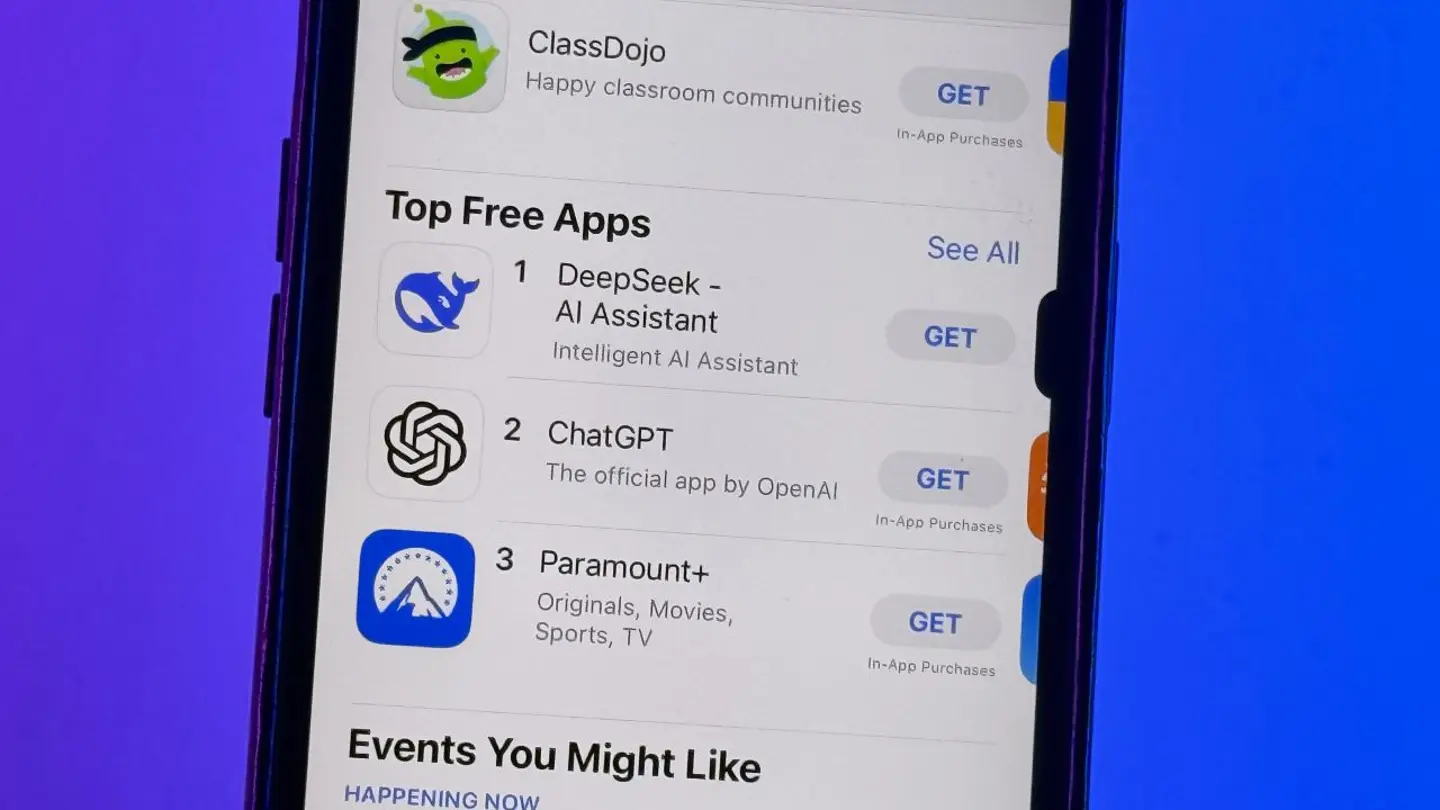
DeepSeek now has over 20 million daily users. While ChatGPT still has six times more, DeepSeek is rising quickly and currently ranks #1 in app downloads in China.
China benefits from a centralized government and fewer barriers related to data privacy, which accelerates AI research and development.
The U.S. still holds a strategic advantage in core technologies thanks to NVIDIA and TSMC. NVIDIA is estimated to be about two years ahead of Huawei. TSMC – the Taiwan-based chip manufacturer – remains the global leader, while China’s SMIC still lags behind.
U.S. export controls have blocked China’s access to high-end chips, but this has ironically accelerated China’s push for tech self-sufficiency.
Some U.S. states have banned DeepSeek on government devices due to concerns over security and censorship linked to China.
📌 China has narrowed the AI model gap with the U.S. to just 3–6 months. DeepSeek outperformed U.S. models in the MMLU-Pro test and now boasts over 20 million daily users. While the U.S. maintains its lead through NVIDIA and TSMC, that edge could be at risk if it fails to innovate quickly or becomes constrained by excessive regulation.
