


- Meta is investing 10 billion USD to build the largest data center to date in Richland Parish, Louisiana– a poor rural area where a quarter of the population lives below the poverty line.
- The project, named Hyperion, consists of 9 buildings covering an area of over 4 million ft² (371,612 m² ~ 37 ha) – larger than Disneyland – and could consume electricity equivalent to 4 million households.
- Mark Zuckerberg calls this a strategic move to pursue “superintelligence”, compensating for the failure of the Metaverse and accelerating the race against Google, Amazon, and OpenAI.
- The project initially consumes 2 gigawatts and can be expanded to 5 gigawatts – equivalent to 2–3 times the total electricity demand of New Orleans.
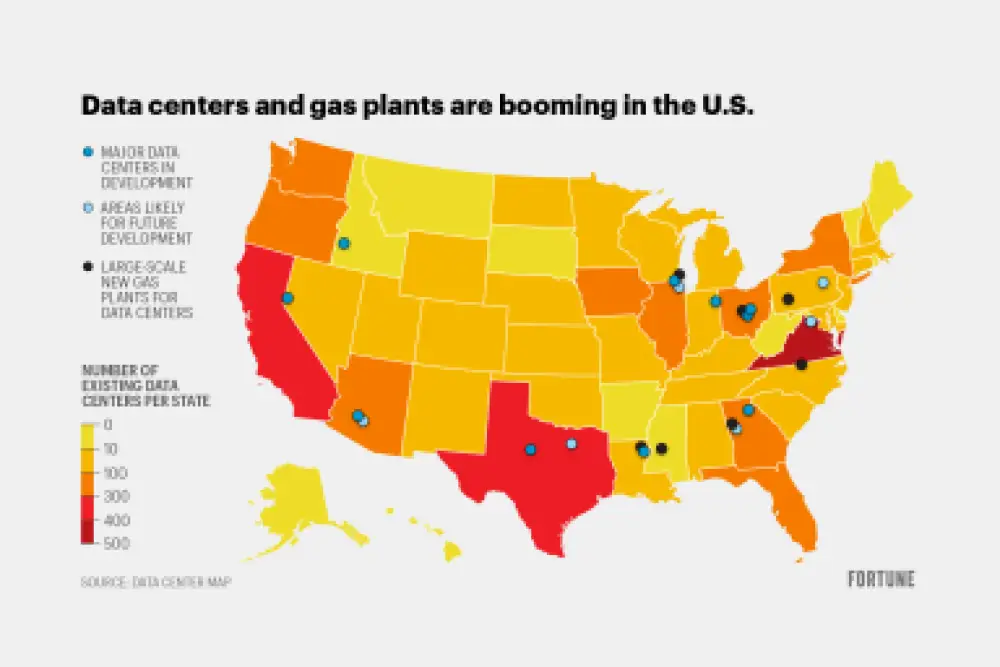
- To supply the power, Entergy will build 3 new gas-fired power plants with a total capacity of 2.3 GW– the first new power plant project in the region in decades.
- Meta will cover the electricity costs for the first 15 years and has committed to building 1.5 GW of solar power and battery storage – helping the project gain support from the Sierra Club, but it still faces opposition from many other environmental groups.
- The Hyperion project has become a national model for the collaboration between Big Tech and the energy industry – according to assessments by executives and experts.
- However, concerns are growing:
- The project occupies agricultural land and water resources, affecting the livelihoods of farmers.
- Electricity costs for residents may increase if Meta withdraws early or if the demand does not actually reach 2.3 GW.
- A new law in Louisiana that allows gas-fired electricity to be counted as “green energy” is causing controversy over environmental standards.
- With the surge in AI demand, a report from the U.S. Department of Energy predicts that the electricity consumption of data centers could account for up to 12% of national electricity by 2028.
- This year, Amazon, Google, and Microsoft are each expected to invest 75–100 billion USD in AI data infrastructure, while Meta alone will increase its spending from 28 billion USD (2024) to 70 billion USD this year, and will continue to increase it sharply in 2026.
- The project also creates tension between local interest groups: residents are concerned about floods, pollution, and water shortages, while oil and gas companies like Exxon and Shell are opposed due to fears of increased electricity prices for their refineries.
- Although not yet operational until 2030, Meta is already reshaping the national energy landscape – with a series of other states beginning to replicate the model of gas-fired power + AI supercomputer collaboration.
📌 Meta is making waves by building Hyperion – a 10 billion USD super data center in Louisiana that consumes twice the electricity of New Orleans, paving the way for the AI superintelligence race. Hyperion consists of 9 buildings covering an area of approximately 37 hectares. Entergy will build 3 new gas-fired power plants with a total capacity of 2.3 GW – the first new power plant project in the region in decades. Meta will cover the electricity costs for the first 15 years and has committed to building 1.5 GW of solar power and battery storage. The Hyperion project is becoming a national model for collaboration between Big Tech and the energy industry; however, it faces criticism regarding the environment, electricity costs, and the risk of building unnecessary infrastructure.
Tổng hợp.


