



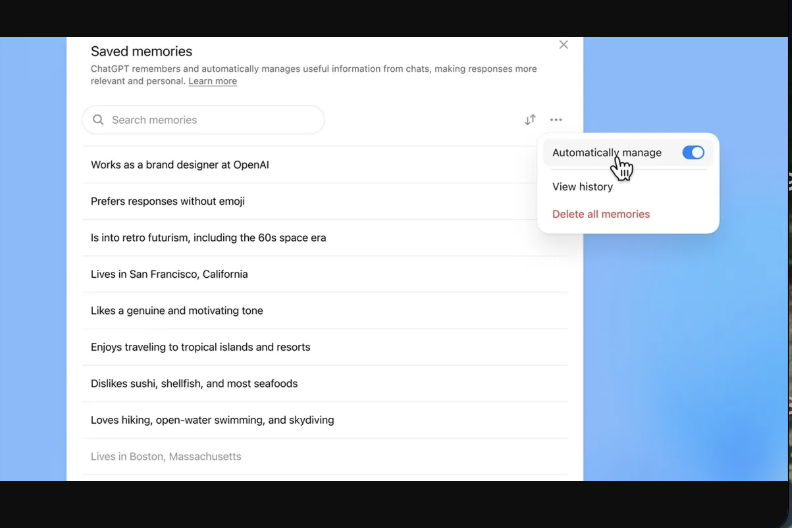
- OpenAI has just announced a groundbreaking memory upgrade for ChatGPT, allowing the chatbot to automatically forget information that is no longer important, instead of storing all user data as before.
- The “memory prioritization” feature helps ChatGPT decide what should be kept “top of mind” based on the frequency and recency of user mentions.
- For example: if you talk about a toddler’s sleep schedule all week, that information will be prioritized; whereas a sourdough starter from June will be automatically demoted.
- This update prevents the “memory full” issue, eliminating the need for users to manually delete old data – a process that previously made the system cumbersome.
- Users still have full control: they can view, edit, reorder, or delete memories, and even restore older versions.
- OpenAI describes ChatGPT as now being like a “digital brain” with natural selection, knowing how to organize and gradually forget irrelevant information, similar to how human memory works.
- The new system is being rolled out globally to ChatGPT Plus and Pro users on the web starting October 15, 2025.
- Users can search memories by time and priority, and customize their memory list for a more personalized experience.
- This mechanism is not just a technical upgrade but also signifies the “socialization” of AI memory, helping the chatbot become a long-term interactive partner rather than just an instant-response tool.
📌 Summary: OpenAI has just announced a groundbreaking memory upgrade for ChatGPT, allowing the chatbot to automatically forget information that is no longer important, instead of storing all user data as before. The new system is being rolled out globally to ChatGPT Plus and Pro users on the web starting October 15, 2025. This upgrade transforms the AI from a Q&A tool into a personal assistant with persistent memory, paving the way for a generation of generative AI that truly “understands and remembers” users in the most natural way.


