



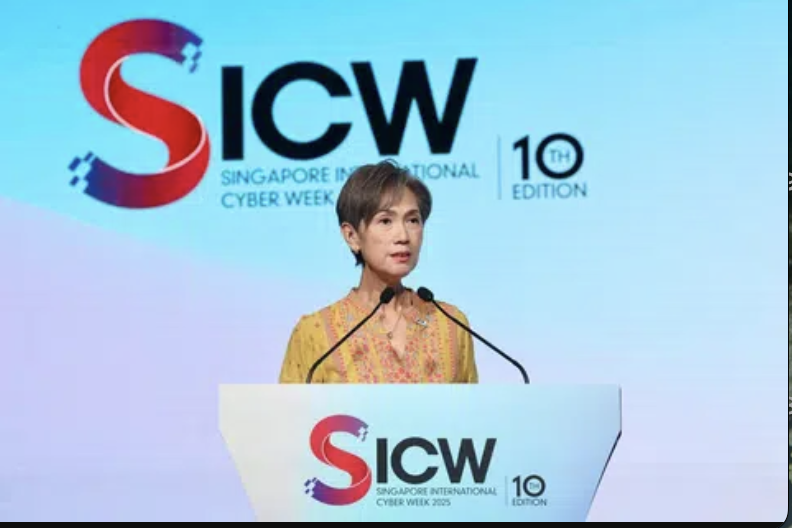
- On October 22, 2025, Singapore’s Minister for Communications and Information Josephine Teo announced that the nation will adopt a proactive, practical, and collaborative approach to governing agentic AI—artificial intelligence systems capable of autonomous action—and quantum computing.
- Speaking at the Singapore International Cyber Week conference, Mrs. Teo raised the core question: “Who is responsible when agentic AI fails?” and asserted that these new technologies “demand entirely new policy thinking.”
- Singapore announced three major initiatives:
- Updating the Cyber Security Agency’s (CSA) guidelines on securing AI systems to extend to agentic AI.
- Signing an agreement with major tech corporations (Google, AWS, Microsoft, TRM Labs) to share AI-driven cyber threat data.
- Publishing a Quantum Readiness Index and a Quantum-Safe Handbook to help organizations prepare for the risk of quantum attacks.
- The government emphasized the need to build public trust and establish a framework for testing and verifying accountability before deploying AI at scale. “Acting too late will cause us to repeat the mistakes of the fake news and digital divide era,” she warned.
- Public agencies are permitted to experiment with agentic AI through sandboxes like the GovTech–Google Cloud collaboration, helping to identify appropriate “guardrails” after observing how the AI operates and fails.
- Singapore is adopting a risk-based sectoral approach, ensuring governance measures are “commensurate with the risk.” Although AI is automated, humans remain ultimately responsible.
- In the quantum domain, the CSA has opened public consultation on two new documents to guide migration to quantum-safe cryptography, especially for critical information infrastructure.
- Internationalization is a key focus: Singapore calls for shifting global cooperation from principles to practice, allowing companies to have their AI systems audited once for global compliance.
- On the sidelines of the event, Singapore signed a memorandum of cooperation with Microsoft and the ASEAN-Singapore Cybersecurity Centre of Excellence, focusing on applying AI for cyber defense.
📌 Summary: Singapore will adopt a proactive, practical, and collaborative approach to govern agentic AI—artificial intelligence systems capable of autonomous action—and quantum computing. The Cyber Security Agency (CSA) will update its guidelines on securing AI systems to extend to agentic AI. Singapore calls for shifting global cooperation from principles to practice, allowing companies to have their AI systems audited once for global compliance.


