



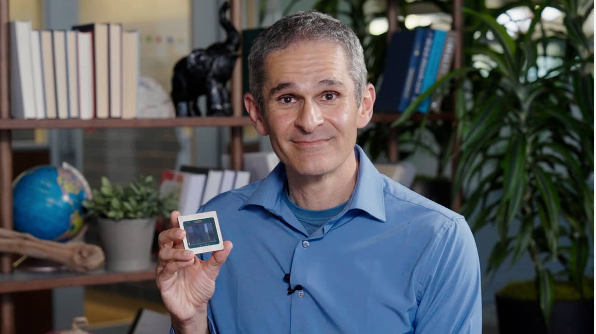
- At the all-hands meeting on November 6, Amin Vahdat – Google’s head of AI infrastructure – stated that AI demand is forcing Google to double its serving capacity every 6 months to meet growth. An internal slide clearly outlined the goal: “Double every 6 months… reaching 1,000x in 4–5 years.”
- He commented that AI infrastructure is the most expensive and competitive front. Google is increasing capacity not only by expanding infrastructure but also through more efficient models and custom silicon.
- Alphabet just raised its 2025 capital expenditure forecast to about $91–93 billion USD, and 2026 will see a “sharp increase.” Microsoft, Amazon, and Meta are also increasing capex, with the group’s total spending exceeding $380 billion USD this year.
- Vahdat emphasized that the goal is not to “spend the most” but to build an infrastructure that is “more stable, high-performance, and scalable” than competitors. The newly announced TPU Generation 7 Ironwood is nearly 30 times more energy-efficient than the TPU Cloud 2018.
- Thanks to DeepMind, Google has the advantage of predicting future AI models, thereby designing appropriate compute power. The company aims to provide 1,000 times the compute, storage, and networking capacity with nearly the same cost and energy consumption level.
- Sundar Pichai predicted 2026 will be “stressful,” as cloud and AI demand surges. Google Cloud recorded quarterly revenue of over $15 billion USD, an increase of 34%, with a backlog of $155 billion USD but still lacking compute capacity to fully meet demand (e.g., Veo).
- Pichai admitted concerns about an “AI bubble,” but warned that the greater risk is under-investing. He believes that cloud results would be even higher if Google had more computing capacity.
- The market fluctuated after Nvidia’s results – a Google customer and partner. Nvidia reported a 62% revenue increase but its stock still fell 3.2% due to fears of a bubble and industry volatility. Alphabet dropped 1.2%.
- Google just launched Gemini 3 to compete with OpenAI and wants to expand user access, but the bottleneck remains the real-time AI serving capacity.
- CFO Anat Ashkenazi stated that the sharp increase in capex is to leverage the opportunity to move customers from physical data centers to the cloud and not miss the current “market momentum.”
📌 Google must double its AI capacity every 6 months to meet surging demand, aiming for a 1,000x increase in 4–5 years. AI infrastructure is the most expensive and competitive front. Google is increasing capacity not only by expanding infrastructure but also through more efficient models and custom chips. The goal is not to “spend the most” but to build an infrastructure that is “more stable, high-performance, and scalable” than competitors. 2025 capex is about $91–93 billion USD, cloud revenue increased by 34% to over $15 billion USD but still lacks compute capacity, with a backlog of $155 billion USD. TPU Ironwood is nearly 30 times more energy-efficient than the 2018 TPU, showing the direction of custom silicon. Despite concerns about an AI bubble, Google considers under-investment to be the biggest risk.


