



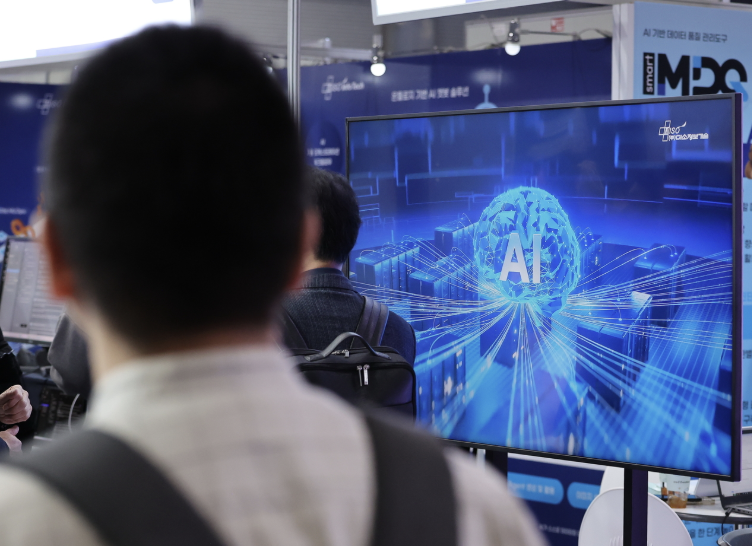
- The South Korean government announced its first national “AI Talent Development Plan for All,” with a total investment of 1.4 trillion won (approx. 960 million USD), aiming to build a comprehensive AI talent training ecosystem from elementary school to Ph.D. candidates and adult workers.
- This plan was introduced by the Ministry of Education on Nov. 10,2025, marking the first national strategy aimed at making South Korea one of the world’s top three AI powers.
- The government wants to address the “brain drain,” as outstanding students increasingly leave engineering and technology fields for high-income sectors like medicine and finance.
- According to the Global AI Index 2024 by Tortoise Media (UK), South Korea ranked 6th out of 83 countries in overall AI capability but only 13th in AI human resources, indicating a severe shortage of high-level experts.
- The government will implement a “fast track” program for outstanding students, helping them complete bachelor’s, master’s, and doctoral programs in just 5.5 years (instead of the usual 8+ years). The goal is to allow young researchers to enter the labor and academic markets in their early 20s.
- The number of specialized and science high schools with AI departments will double from 14 to 27 by 2026.
- The government will also establish a “National Honorary Professor” system, allowing top scholars to continue teaching and researching past the retirement age of 65, aiming to retain talent and prevent them from moving abroad.
- To shorten the technology gap between Seoul and the provinces, 3 key national universities will receive a total of 30 billion won (20.5 million USD) in 2026 to open specialized AI departments, build GPU infrastructure, and develop local training programs.
- Additionally, the Brain Korea 21 program will fund inter-university research clusters and expand AI admission quotas at public universities.
- In K-12 education, the government will invest 900 billion won (616 million USD) for elementary/middle schools and 500 billion won (342 million USD) for high schools to integrate AI into the official curriculum.
- Starting in 2026, AI Education Support Centers will be established in 3 regions, expanding to 17 centers nationwide by 2028, offering courses for students, parents, and teachers.
- By 2030, 7 new AI-oriented Meister (vocational) high schools will be added annually, helping increase the AI major ratio in vocational schools from 20% currently to 50%.
- All K-12 schools will be equipped with “smart science labs” by 2027 (up from 60% currently), enabling students to learn coding, robotics,and data processing.
- The number of schools with AI clubs and modules will increase from 730 to 2,000 by 2028, and the national K-12 curriculum will be revised to make AI a core subject.
- 📌 Summary: With a nearly $1 billion investment, South Korea is implementing a “lifelong AI” strategy to universalize AI skills for all citizens—from young children to working adults. The government will launch a “fast track” program (B.S./M.S./Ph.D. in 5.5 years vs. 8+). It will also establish a “National Honorary Professor” system (post-65 retirement) to retain talent. In K-12, it will invest $616M (elementary/middle) and $342M (high school) to integrate AI into the official curriculum.


