



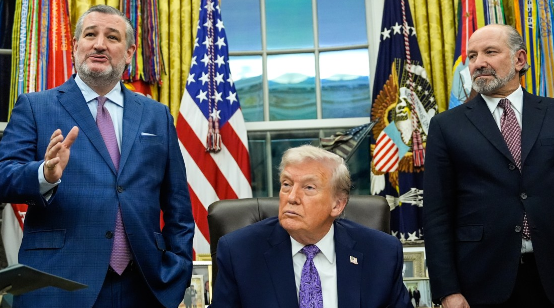
- President Donald Trump has signed an executive order aiming to limit the ability of US states to enact their own laws regulating AI companies.
- The goal of the order is to maintain and enhance US global leadership in AI through a “least burdensome” national policy framework.
- Trump argues that if AI businesses have to seek approval from 50 different states, large-scale investment in the US would no longer be feasible.
- The order requires Attorney General Pam Bondi to establish an “AI Litigation Task Force” within 30 days.
- The sole duty of this group is to challenge state AI laws that contradict the Trump administration’s light-touch regulatory direction.
- Commerce Secretary Howard Lutnick is tasked with reviewing state laws that force AI models to alter “truthful output,” aligning with the campaign against “woke AI.”
- States with laws deemed “overly harsh” may have to commit to non-enforcement if they want to receive discretionary federal funding.
- The order directs David Sacks and Michael Kratsios to propose federal legislation to preempt state laws on AI.
- Certain areas such as child protection, data center infrastructure, and state public procurement are temporarily unaffected.
- Previously, the US Congress failed twice in 2025 to pass federal laws intended to nullify state AI regulations.
- Critics argue the order is a way to “freeze” all substantive AI regulation efforts.
- Brad Carson predicts the order will soon be blocked in the courts.
- Supporters emphasize this is a necessary step for the US not to lose to China in the AI race.
- Both the MAGA faction and Democrats have expressed concerns about the excessive power of AI corporations and the lack of control over frontier labs.
📌 President Donald Trump has signed an executive order aiming to limit the ability of US states to enact their own laws regulating AI companies. Trump’s AI order reflects the sharp conflict between the goal of technological leadership and the need for social protection. In the context of a deadlocked Congress, the White House has chosen to centralize AI regulation at the federal level, prioritizing accelerated investment and competition with China. However, nullifying state laws risks creating a “regulatory vacuum,” raising concerns about safety, citizens’ rights, and the role of local control over power.


