


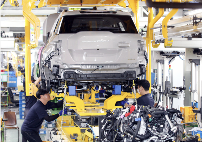
- The semiconductor boom driven by AI is shifting career perceptions in South Korea, where production workers at large corporations are dubbed “kingsanjik” due to their extremely high incomes.
- A record 2,500 people dropped out of four-year universities to attend vocational colleges for factory roles this year, a 23% increase compared to the same period last year.
- Production line positions at SK hynix are attracting university graduates from unrelated fields due to massive bonuses fueled by the AI chip craze.
- SK hynix employees could receive an average performance bonus of about 800 million won (approx. $540,000) early next year; Samsung Electronics chip employees are expected to receive around 600 million won each.
- In a survey of 1,800 Gen Z workers, 60% chose a production job with a 70-million-won salary over an office job paying 30 million won. 68% viewed manual labor positively, up 5 percentage points from last year.
- Generative AI is increasing concerns over the future of office jobs, with Meta Platforms cutting about 8,000 roles and Amazon confirming 16,000 office staff layoffs.
- CEO Jensen Huang believes this is the era of electricians, technicians, and skilled workers, while Elon Musk predicts AI could replace nearly half of all office jobs.
- Data shows 65.4% of non-manufacturing firms in South Korea have adopted AI, much higher than the 42.6% in manufacturing, putting office work under greater automation pressure.
📌 AI is reversing the traditional occupational hierarchy in South Korea. While office jobs face automation pressure and large-scale layoffs, semiconductor production workers enjoy bonuses worth hundreds of millions of won thanks to the AI craze. This trend is leading many young people to prioritize skilled labor over university degrees, while simultaneously changing social perceptions of the value of blue-collar work.
