


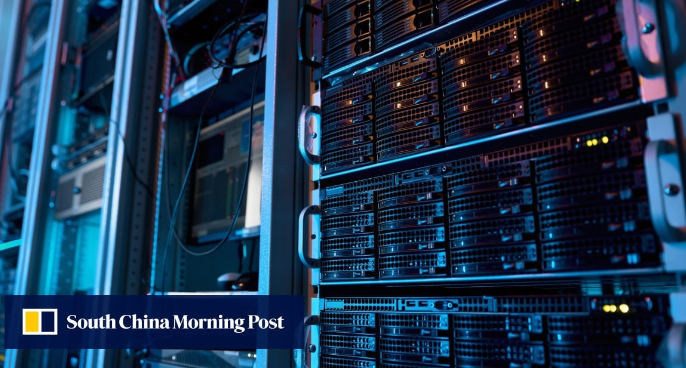
- China announced that its total domestic AI computing capacity has reached 1,882 exaflops, according to the Ministry of Industry and Information Technology (MIIT).
- This figure is more than 6,000 times higher than the capacity recorded in the Top500 ranking, the international benchmark for supercomputers.
- The discrepancy suggests the existence of a “dark pool” of compute – computing power that is not fully reflected in public reports.
- The new data highlights the rapid growth of AI infrastructure in China, far exceeding previous Western estimates.
- Top500 is believed to underestimate real strength because it does not cover all domestic systems or uses different measurement standards.
- The US does not announce a total national AI capacity because most infrastructure is privately owned and measured using various methods.
- Stanford estimates show that the US still accounts for about 50–75% of global AI capacity and owns many of the largest AI data centers.
📌 China announced a level of 1,882 exaflops, which is more than 6,000 times higher than Top500 data, raising questions about unrecorded “hidden computing power.” This reflects an extremely fast AI development speed and the potential concealment of its true scale. Meanwhile, the US still leads with 50–75% of global capacity but lacks aggregate data, making the AI competition difficult to evaluate accurately.


