



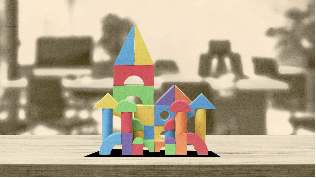
- The article argues that the biggest barrier to AI adoption is not technology, but human mental state and work culture.
- According to the authors, AI makes work more unpredictable with fast-paced decisions, high pressure, and greater uncertainty.
- Research by Dr. Stuart Brown shows that play is a mental state that helps people focus, engage, and lose track of time.
- A pilot study found that just 20 minutes of practicing improvisation (improv) can improve brain activity regulation, attention, and cognition.
- fMRI studies show that improvisation activities simultaneously activate multiple networks related to memory, emotion, attention, and social interaction.
- Play increases neurotransmitters such as dopamine, oxytocin, serotonin, and endorphins, which support learning and reduce stress.
- The Gallup 2026 report states that global employee engagement has dropped to 20%, the lowest since 2020.
- Gallup estimates this situation costs the global economy about $10 trillion annually.
- A cited MIT study shows that 95% of businesses have yet to record clear measurable results from their AI investments.
- Only 12% of employees say AI has created significant changes in how they work.
- The authors believe AI needs managers who are curious, flexible, and willing to experiment, yet this is the group losing motivation the fastest.
- Successful organizations often reduce unnecessary meetings, create space for focus, and build human connection rituals through simple play activities.
📌 For AI to be effective, businesses need to invest in people as much as they invest in technology. With global employee engagement at just 20% and 95% of businesses yet to see clear results from AI, adding more tools may not be the answer. Research shows that play, improvisation, and social connection make the brain more flexible, reduce stress, and increase adaptability. In the AI era, very human capabilities such as curiosity, creativity, judgment, and trust-building may become the most important competitive advantages.


