


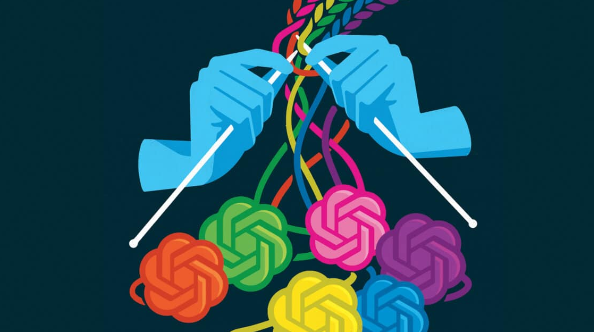
- The article synthesizes results from four studies—on short story writing, circular economy solutions, funny caption contests, and collaborative storytelling—to assess the impact of generative AI on individual and collective creativity.
- A consistent result across all four studies shows that generative AI enhances the quality of individual output but simultaneously reduces the diversity of ideas within the group.
- This leads to many people creating options with similar structures and content.
- Researchers define creativity not only as novelty and usefulness but also requiring diversity within the set of ideas. This diversity creates opportunities for breakthrough ideas and opens entirely new directions.
- In the short story study, analysis revealed that AI-assisted works were more similar in plot, structure, and execution, raising average quality while narrowing the collective idea space.
- In the circular economy study, the human-only group generated diverse ideas, from traditional recycling to unique initiatives like Lego-like interlocking bricks made from casting dust.
- Conversely, individuals paired with AI created solutions rated higher for feasibility and business value, but truly novel and breakthrough ideas primarily appeared in the human-only group.
- Another study found that if AI is involved from the ideation stage, diversity drops significantly. However, if humans generate ideas first and use AI only for evaluation, diversity remains nearly equal to non-AI groups.
- Results also showed that when AI takes the lead role, products become most similar. When humans lead the ideation stage, diversity is preserved at a level nearly equal to a fully human process.
- The researchers emphasize a key paradox: AI raises the “quality floor” but lowers the chance of unique and breakthrough ideas, a significant risk for businesses dependent on innovation.
- To leverage AI without losing diversity, humans must lead during brainstorming and initial idea building, using AI only for finalization or refinement.
- Businesses should diversify AI use by varying prompts, using multiple models, and combining internal data to generate different perspectives.
- The authors propose “guardrails” in workflows, such as requiring employees to present their own ideas before consulting AI or explaining why an AI-suggested option was chosen.
📌 A synthesis of 4 studies proves that generative AI enhances individual creative quality but narrows the collective idea space. Less experienced creators benefit the most, but businesses need to design rational processes: let humans lead the idea formation stage, use AI for finalization, and combine multiple agents, multiple models, and control rules to maintain diversity, quality, and the ability to produce sustainable breakthroughs.
