



- The article highlights that not only semiconductor companies but also many traditional Japanese enterprises are significantly benefiting from the AI wave by providing materials and components for the chip supply chain.
- Shares of Toto, Nittobo, and Ajinomoto have risen by approximately 78%, 63%, and 61% respectively since the beginning of the year due to booming demand from the AI-driven semiconductor industry.
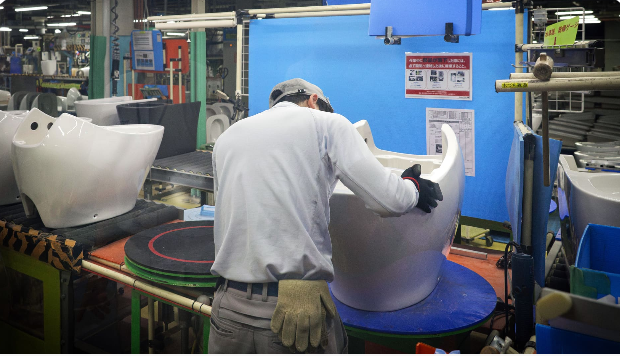
- Toto, famous for its toilets, produces ceramic electrostatic chucks used in chip-making equipment, which help increase the yield of advanced chips.
- In the fiscal year ending March 31, Toto’s technical ceramics segment saw a 34% increase in revenue and a 42% rise in operating profit, offsetting the decline in the traditional sanitary ware segment.
- However, Toto maintains that it has no plans to abandon its 100-year-old sanitary ware business, continuing to balance both sectors to mitigate risks from the highly volatile semiconductor industry.
- Nittobo, known for textiles and fiberglass, is benefiting from its T-glass products and electronic materials used in printed circuit boards and semiconductor packaging substrates.
- Nittobo’s electronic materials segment saw revenue grow by 20.4% and operating profit by 39.7%, contributing about 91% of the entire company’s revenue increase last fiscal year.
- Ajinomoto, the MSG producer, developed ABF (Ajinomoto Build-up Film) insulation material using technology derived from MSG production. ABF is now widely used in packaging high-performance chips like CPUs and data center servers.
- Ajinomoto’s “Healthcare and Others” segment, which includes ABF, saw revenue grow by about 4% and business profit jump by 45.1%, surpassing the frozen food segment in both revenue and profit.
- All three companies stated that AI, data centers, 5G, and the demand for high-performance chips will continue to drive growth while they maintain their traditional business sectors.
📌 The AI wave is creating unexpected beneficiaries in the Japanese economy. Instead of directly manufacturing chips, businesses like Toto, Nittobo, and Ajinomoto are leveraging material and technological strengths accumulated over decades to integrate deeply into the semiconductor supply chain. The strong growth of AI-related segments improves business results and demonstrates that AI opportunities are not just for tech firms but also open to many traditional manufacturing industries.


