


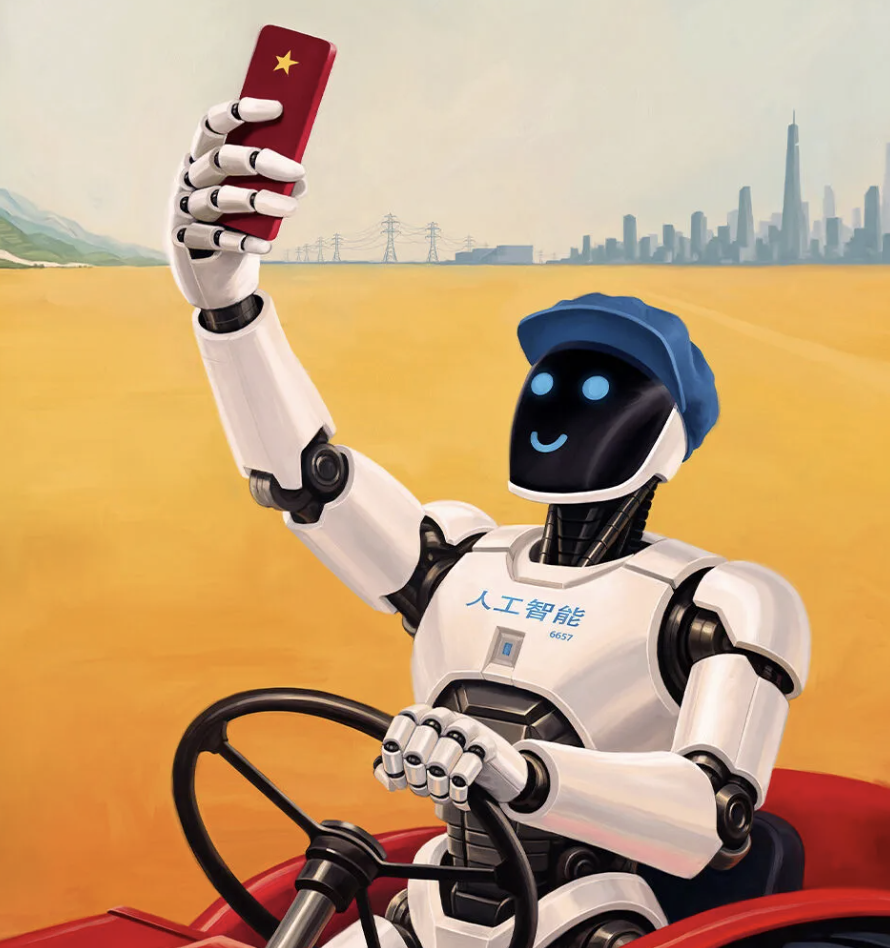
The article argues that AI will become a test for the political models of the US and China, as competition lies not only in developing AI but also in the ability to deploy the technology across the entire economy.
According to the author, the gap between Chinese and US AI is rapidly narrowing. New models like Qwen3.8-Max and Kimi K3 now achieve performance nearly equivalent to advanced US models like Anthropic’s Fable 5.
However, analysis by Artificial Analysis shows that US models still deliver a better performance-to-cost ratio in most use cases.
Although China currently builds only about one-tenth of the data center capacity compared to the US, the article notes that this gap can narrow thanks to strong infrastructure investment capacity, the construction of data centers in Southeast Asia, and China’s total power generation capacity currently being nearly three times that of the US.
China is also seeking to bypass export controls by smuggling Nvidia chips, renting computing infrastructure overseas, and expanding Huawei’s domestic chip production.
The author argues that China’s biggest advantage lies in its ability to deploy AI on a large scale. A logistics business reduced driver demand by about 30% when applying AI-assisted trucks, while 95% of the 128,000 online microdramas released in the first quarter of 2026 were created using AI, replacing many actors and production crews.
China is also strongly promoting robotization. The government aims to have 10,000 humanoid robots working in practical roles by the end of 2026, while Morgan Stanley forecasts that humanoid robot sales will reach 446,000 units in 2030, about nine times this year’s figure.
However, the author believes that AI could create immense social pressure. Youth unemployment currently stands at about 15%, over 300 million people work in the gig economy, and the rate of job losses due to AI could far outpace the aging population rate.
The article assesses that the Chinese government will face difficulties in balancing AI promotion and maintaining social stability. Proposals such as taxing AI companies or implementing universal basic income have appeared in Party journals, but President Xi Jinping has repeatedly opposed cash subsidy policies out of concern that they would reduce work motivation.
The author forecasts that China may allow AI to continue developing rapidly until serious social problems emerge, after which it will intervene as it once did with the tutoring and video game industries. However, this “stop-go” approach risks slowing down innovation speed and making it difficult for China to maintain its advantage over the US.
📌China’s greatest challenge in the AI era is not technology but social governance. Although the country is rapidly narrowing the AI model gap and holds the advantage of large-scale deployment, AI could also increase unemployment, especially with over 300 million people working in the gig economy and a youth unemployment rate of around 15%. According to the author, Beijing’s challenge will be balancing technological innovation and social stability, a task considered even more difficult for a centralized regime.
