


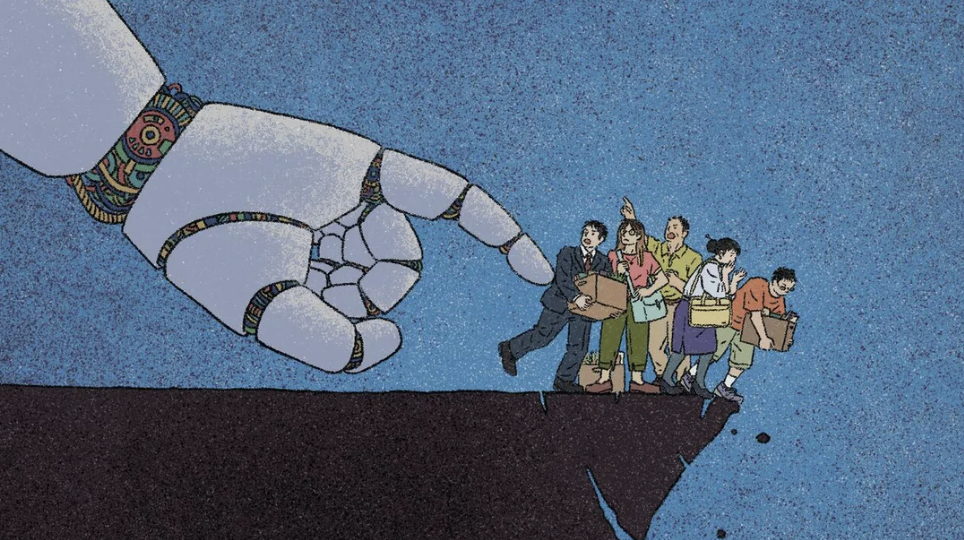
The article suggests that China is promoting AI at a rapid pace to compete with the US and cope with an aging population, but this very technology also risks displacing millions of workers and putting pressure on social stability.
The online microdrama industry reached a scale of about 100 billion yuan (approx. $13.9 billion) in 2025, creating about 700,000 direct jobs and around 1.3 million indirect jobs. However, after ByteDance launched Seedance 2.0, production time dropped from weeks to just days, and costs fell by up to 90%, causing the income of many actors to drop by half and triggering a sharp decline in employment.
China currently has about 38 million truck drivers, transporting over 70% of the country’s goods. Inceptio’s driving assistance technology has been installed on about 7,000 trucks and is expected to exceed 10,000 trucks this year. A logistics enterprise stated that the system reduces driver demand by 30% and saves 3-4% on transportation costs.
JD.com has deployed a 31-km autonomous truck route in Beijing, and Chairman Liu Qiangdong announced plans to purchase 3 million robots, 1 million unmanned vehicles, and 100,000 drones over the next 5 years, while affirming that employees will be retrained rather than laid off.
China installed nearly 300,000 industrial robots in 2024, accounting for more than half of all new industrial robots globally, bringing the total to about 2 million, double the figure in 2021. Morgan Stanley forecasts humanoid robot sales to reach about 50,000 units worth $2 billion this year, and rise to 446,000 units worth $15 billion by 2030.
Although humanoid robots are expected to boom starting next year, many new jobs currently consist only of training robots by repetitively performing simple actions to generate training data.
The Chinese government is concerned that AI will exacerbate youth unemployment and income pressures. For the first time in decades, the 5-year development plan does not set a target for urban job creation.
China is expanding AI education from elementary schools to universities while opening thousands of new programs in AI, robotics, and smart manufacturing, while cutting back on majors considered obsolete.
Some experts propose taxing profits generated by robots and AI, or establishing unemployment insurance specifically for AI. However, the government remains cautious about large-scale welfare policies. Meanwhile, the number of flexible workers in the gig economy is projected to increase from 280 million in 2025 to 320 million this year, reflecting the trend of many workers shifting to more precarious jobs.
📌China is facing a major paradox of the AI era: technology helps maintain manufacturing capacity and solve the aging population problem, but at the same time accelerates the displacement of labor across many industries. From microdramas to logistics and manufacturing, AI is reducing costs and increasing productivity, but it is also forcing many people into less stable jobs. Amidst the growing risk that the gap between those who benefit from AI and those who are displaced will widen, China is seeking a balance between promoting technological innovation and maintaining social stability.
