


- An analysis by Wells Fargo shows that since the launch of ChatGPT in 2022, large-cap companies recorded a 5.5% increase in real productivity per worker, while small businesses (small-cap) in the Russell 2000 index saw a 12.3% decrease.
- During the same period, the S&P 500 index rose by 74% compared to the 39% increase of the Russell 2000, reflecting the growth and AI application efficiency gap between the two groups.
- Large corporations like Amazon, Microsoft, Meta, Oracle, and UPS have invested billions of dollars in AI to optimize supply chains, reduce costs, and cut staff. Many companies announced historical layoffs in 2025, citing “AI-driven automation” as the main factor.
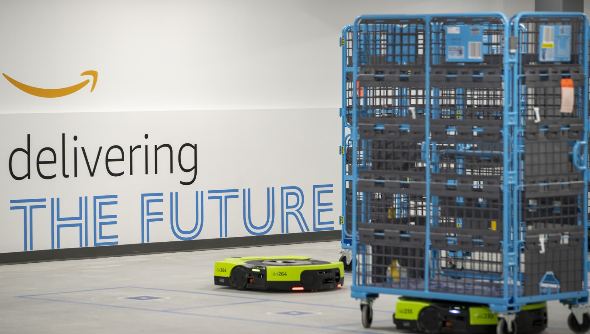
- Amazon leads the robotization trend, with the autonomous Proteus robot system helping to reduce packaging and delivery costs by about $0.30 per order, saving $2–4 billion by 2027. Amazon leaders suggest that 500,000 jobs could be replaced by robots in the next few years.
- A report by the World Economic Forum (WEF) indicates that 40% of global businesses expect to reduce staff in the next 5 years in positions that can be replaced by AI.
- Klarna reduced its workforce by 40% thanks to AI; IBM plans to cut 30% of non-customer-facing positions by 2028; CrowdStrike reduced 5% of employees due to high AI performance.
- However, small businesses are also striving to catch up: a survey by Intuit QuickBooks (September 2025) shows that 68% of small businesses in the US, Canada, UK, and Australia have integrated AI – two-thirds of which reported an increase in productivity.
📌 The rise of AI is reshaping the global economy: “giants” like Amazon and Microsoft benefit from a 5.5% increase in productivity and a 74% surge in stock prices, while small businesses face pressure with a 12.3% decrease. This technology gap risks turning AI into a new “class barrier” in the labor market and productivity.


