



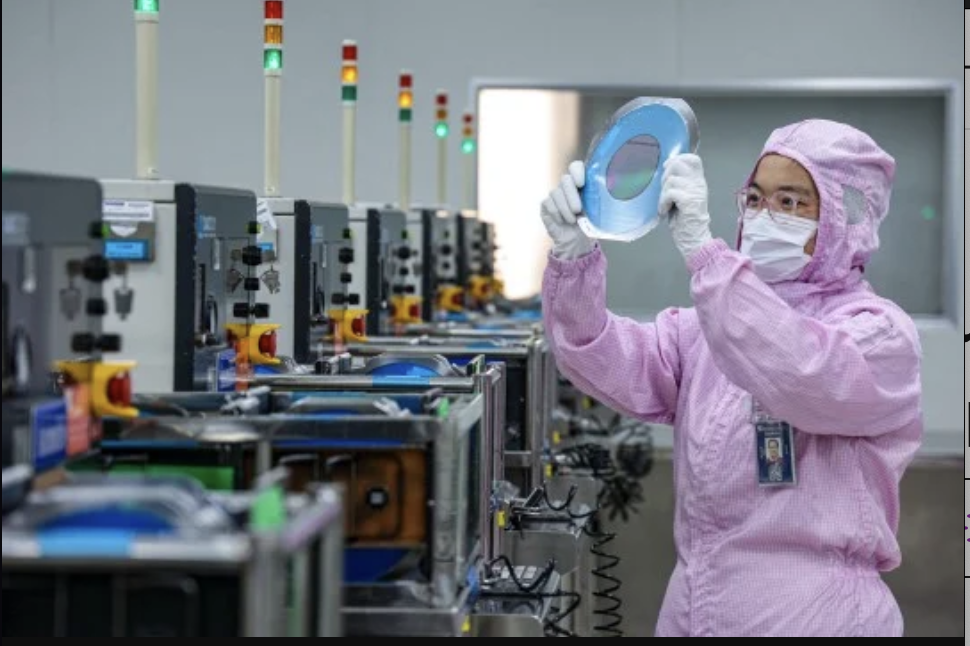
- Strategic Goal: In the draft of its 15th Five-Year Plan (2026–2030), China is placing a strategic focus on AI and semiconductors, viewing them as two “decisive fronts” to achieve its goal of global leadership in science and technology by 2035.
- Competitive Context: The move comes amid increasingly intense international competition, especially as the U.S. and its allies tighten export controls on advanced chips, restricting China’s access to modern semiconductor manufacturing technology.
- Achievements of the 14th Plan (2021–2025):
- National R&D investment increased by 48% compared to 2020.
- The world’s largest number of researchers.
- Global Innovation Index (GII) ranking rose to 10th place.
- Led the world for five consecutive years in the number of high-impact scientific papers and international patent applications.
- Current Areas of Leadership:
- Space exploration (especially the Moon and Mars programs).
- World-leading 5G infrastructure in terms of coverage and commercialization speed.
- Green energy, including battery storage, solar power, and electric vehicles.
- But Key Weaknesses Remain:
- The semiconductor industry remains heavily dependent on imported lithography equipment, materials, and chip design software.
- In AI, although China leads in data scale, academic research, and applications, its foundation models and AI chips are still constrained by hardware limitations.
- Directions for the 15th Plan:
- Accelerate public investment in core technologies, especially next-generation semiconductor materials and AI-native technologies.
- Establish national research centers in collaboration with private enterprises to shorten R&D cycles.
- Expand international talent programs to attract foreign scientists and returning Chinese experts.
- Focus on AI applications in industry, healthcare, defense, and smart cities, while promoting domestic AI chips (NPUs, GPUs).
- Minister of Science & Technology Yin Hejun emphasized at a press conference on September 18 that the 2026–2030 period will be a “decisive key period” for China to achieve breakthroughs in scientific innovation and strengthen its global competitiveness.
📌 Summary: After having dominated 5G, green energy, and space, China is shifting its focus to AI and semiconductors—the two sectors most heavily constrained by the West. The next Five-Year Plan will: Accelerate public investment in core technologies, especially next-gen semiconductor materials and AI. Establish national research centers in collaboration with private enterprises. Expand international talent programs to attract foreign scientists and returning Chinese experts. Focus on AI applications in industry, healthcare, defense, and smart cities, while promoting domestic AI chips (NPUs, GPUs).


