



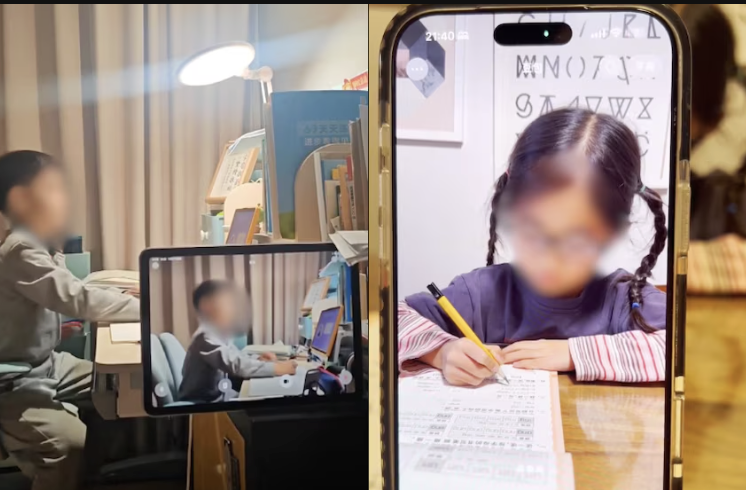
- Artificial intelligence is being used by many Chinese families to monitor children while they do homework, partially replacing parents’ direct supervision.
- Lu Qijun, a journalist in Guangdong, places a phone with the camera on on his son’s desk; an AI chatbot named Dola reminds the child to sit up straight, stop fiddling with his pen, and speed up his work.
- Dola is a chatbot developed by ByteDance and currently has about 172 million monthly active users, according to QuestMobile.
- The app not only monitors but also acts as a tutor: it grades assignments, explains mistakes, and generates similar questions based on a student’s weaknesses.
- Parents can upload trusted parenting books and study materials so the AI can personalize its guidance.
- The trend has spread widely on Chinese social media, with many videos attracting thousands of views from other parents.
- The main drivers are economic pressure amid slowing growth, along with China’s crackdown on private tutoring to reduce education costs.
- Some parents say AI helps avoid conflict: children listen to AI more than to their parents, and the AI’s voice is calm and patient.
- However, experts warn that AI may reduce the necessary conflicts that are important for children’s brain development and social skills.
- Data shows that the learning app Dola Aixue has about 8.76 million monthly active users.
- Many parents still limit usage due to concerns about emotional dependence, privacy, and exposure to inappropriate content.
- Scholars emphasize that AI should only be a supporting tool and cannot replace the companionship of parents and teachers.
📌 As China tightens controls on private tutoring, parents are turning to AI to reduce education costs. Dola, developed by ByteDance, has around 172 million monthly users. It reminds children to sit properly, stop playing with pens, and work faster. Dola also acts as a tutor by grading work, explaining mistakes, and creating similar questions based on students’ weaknesses. Some parents believe AI helps avoid conflicts because children listen to it more readily and it speaks calmly and patiently. Experts warn that AI may reduce the level of conflict necessary for children’s brain development and social skills.


