



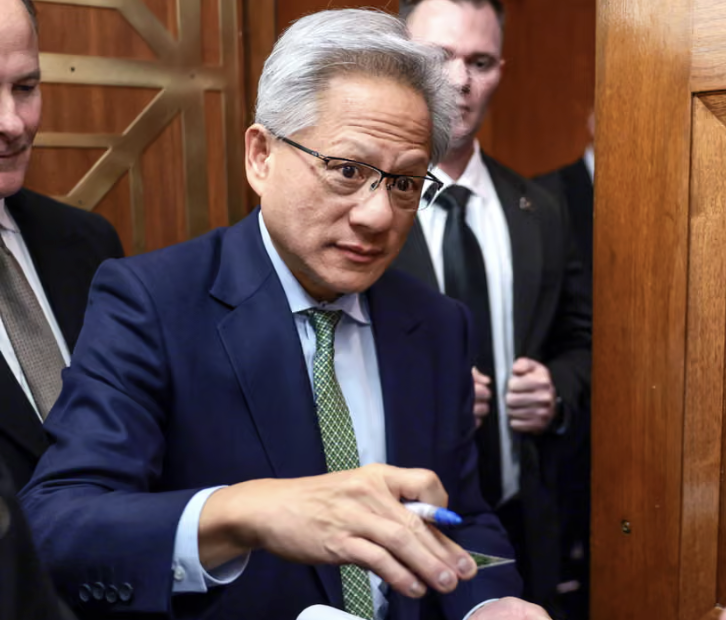
- Valued at over $4 trillion, Nvidia is the core chip and software manufacturer powering the global AI wave, providing infrastructure for systems such as ChatGPT.
- In 2025, Nvidia signed at least $125 billion worth of deals, including a $5 billion investment in Intel and around $100 billion into OpenAI, helping drive unprecedented stock growth.
- Concerns arise from the “circular” nature of many deals, similar to vendor financing: Nvidia invests or lends money so customers can buy Nvidia’s own chips.
- The largest deal is with OpenAI, under which Nvidia invests $10 billion per year for 10 years, with most of that money flowing back to purchase Nvidia chips.
- Comparisons with Lucent and Enron have emerged due to the use of complex financial structures, including special-purpose vehicles (SPVs), although Nvidia denies hiding debt or inflating revenue.
- Investor James Anderson says he admires Nvidia but believes vendor-financing-style deals “do not feel comfortable.”
- Other major AI ecosystem transactions include: Oracle spending $300 billion to build data centers for OpenAI; OpenAI signing multi-billion-dollar chip contracts with AMD; and CoreWeave both selling computing capacity and granting equity to OpenAI.
- OpenAI is betting a total of $1.4 trillion on computing capacity, assuming AI will generate profits large enough to justify the investment.
- Analysts argue Nvidia’s risk lies not in legality but in sustainability: if AI growth slows, the company could face write-downs on investments and receivables.
- Nvidia has also signed multi-billion-dollar agreements with governments including South Korea, Saudi Arabia, Italy, France, and Germany, but the terms and actual revenues remain opaque.
📌 Nvidia is not accused of fraud like Enron, but its growth model relies heavily on circular, vendor-financing-like AI deals—investing or lending so customers can buy Nvidia’s own chips—concentrating risk on the assumption that AI will boom rapidly. With massive figures such as $125 billion in annual transactions and $1.4 trillion in AI infrastructure bets, Nvidia’s future depends on customers becoming profitable quickly enough to keep buying chips. If AI fails to “take off” as expected, investor confidence and the stock price could face a major shock.


