



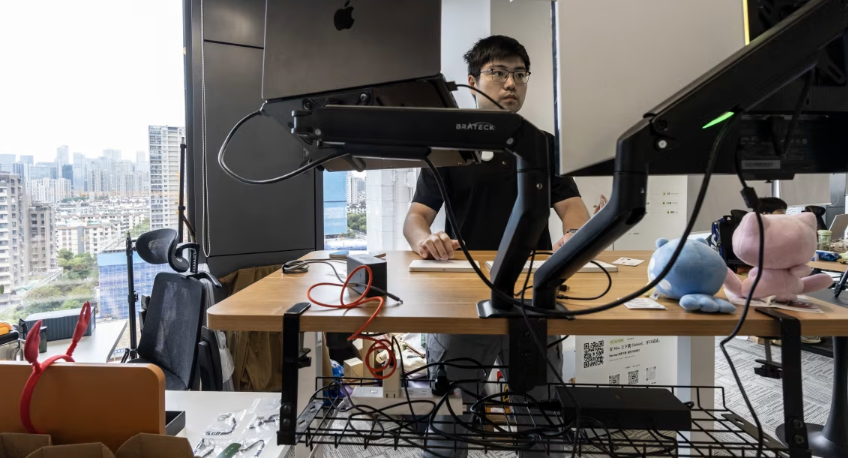
Young people in China are launching one-person startups, using AI for coding, customer service, and marketing to escape corporate pressure and a tough job market.
In 2025, over 7 million one-person businesses were established in China, including non-AI fields, representing an increase of about 42% compared to 2024.
Beijing and local governments are supporting this trend with subsidized housing and offices, computing power vouchers, and hundreds of micro-business incubators.
Hangzhou aims to attract 1,000 solo operators in 2026, allocating over 200,000 square feet of office space and establishing a fund of nearly $150 million.
Honghub currently hosts over 50 one-person companies, with many startups receiving up to $50,000 in seed capital from the incubator.
However, a survey of 1,500 businesses shows that more than half generate revenue under $1,000 per month, reflecting fierce competition.
Wu Songyun’s TideFlow has only about 1,000 users, of whom 35 are paying, leaving the company still operating at a monthly loss.
AI has significantly lowered the barrier to entrepreneurship: 75% of solo founders in the Honghub survey have no technical background yet are able to develop products on their own.
📌 AI is turning one-person businesses into a new career choice in China, with over 7 million such companies emerging in 2025, a 42% increase. The government views them both as a way to promote AI adoption and to absorb young labor. However, business reality is harsh as more than 50% earn under $1,000 a month. AI can replace many functions of a startup team, but finding customers, revenue, and a sustainable business model remain problems that humans must solve.


