


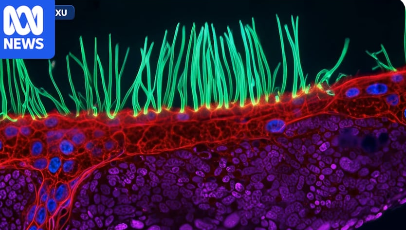
- According to ABC Australia, Nikon has revoked the first-place award in the international microscopy video competition Small World in Motion 2026 after determining that the winning entry violated rules on the use of generative AI.
- The work by Ning Xu, an optical engineering researcher who previously worked at Tsinghua University in China, depicted the movement of cilia in the respiratory tracts of children with a rare genetic disorder.
- The video used 100× magnification and was presented as employing sophisticated illumination techniques to support research into primary ciliary dyskinesia.
- After the award was announced, several microscopy experts identified irregularities, including unnaturally moving cell nuclei and cilia that appeared inconsistent with biological dimensions.
- The research community sent an open letter calling on Nikon to conduct an independent review, warning that inaccurate images could mislead the public about rare diseases.
- Nikon confirmed that the video did not comply with its generative AI rules, while emphasizing that the decision concerned eligibility for the competition and did not constitute a judgment on the author’s scientific reputation.
- After revoking the result, Nikon awarded first prize to Vietnamese researcher Nguyễn Nam Nhật, who had previously placed second.
- Nguyễn Nam Nhật’s video captured a nematode under a microscope interacting with the single-celled organism Dileptus.
- The first prize is worth US$3,000. The international Nikon Small World competition began in 1975 and celebrates the art of microscopy photography and video.
- The incident highlights the need to verify the origin and authenticity of scientific images in the age of generative AI.
📌 The Nikon Small World in Motion 2026 incident shows that generative AI can distort visual evidence even in scientific work. The irregularities were first identified through expert scrutiny, leading to the disqualification of the winning entry and the award of first prize to Vietnamese researcher Nguyễn Nam Nhật. The key lesson is that competitions and research institutions need to examine original data, image-generation processes and the extent of AI intervention before recognizing scientific results.
