



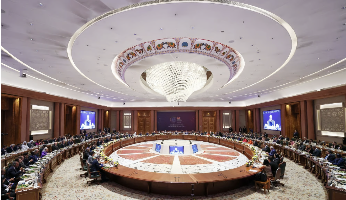
- At the Global AI Summit 2026 in New Delhi, a recurring message was “Don’t do it like Europe,” directly targeting the AI Act passed by the EU in 2024.
- From the first AI Safety Summit in the UK in 2023—when the EU led the drafting of the first global AI law—Brussels’ image has noticeably diminished in the eyes of the international AI community.
- Sriram Krishnan, White House AI policy advisor, suggested the EU environment needs “less focus on governance and pessimism,” as current laws are “not conducive to entrepreneurs building foundational technologies.”
- Amanda Brock (Open UK) stated the EU “shot itself in the foot,” arguing that regulations cannot be built for technology not fully understood.
- Since the AI Act’s inception in 2024, very few countries have followed suit. India announced a “light touch” approach, intervening only in specific harms like deepfakes.
- The EU is balancing its ambition to be a global regulator with the goal of attracting investment, even having to relax some safety provisions due to complaints from businesses about excessive burdens.
- At this year’s conference, the European Commission no longer held the central position it did when President Ursula von der Leyen spoke prominently in Paris previously.
- The EU AI Office organized two sessions on voluntary codes for advanced models like GPT and Gemini, and plans to build “AI factories” to ensure autonomous compute capacity.
- French President Emmanuel Macron affirmed Europe is “not blinded by regulation,” but has yet to convince the global tech world.
- Some opinions, like Mozilla’s, argue that the AI Act and GDPR are standards in the right direction, but the EU faces an “uphill battle” to make them international norms.
📌 The EU is on the defensive as the 2024 AI Act is seen as overly regulatory, stifling innovation. Since the AI Act’s inception in 2024, very few countries have followed suit. India announced a “light touch” approach, intervening only in specific harms like deepfakes. French President Emmanuel Macron affirmed Europe is “not blinded by regulation,” but has yet to convince the global tech world. Although the EU continues to pursue global standards with voluntary rules and plans for AI factories, skepticism from the US and industry indicates Europe must prove that strict regulation does not mean falling behind in the global AI race.


