

- Singaporean universities are shifting from traditional essay grading to evaluating students’ direct thinking, reasoning, and critical skills.
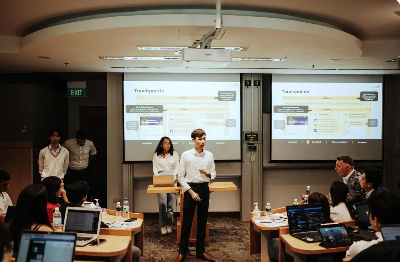
- At Singapore Management University (SMU), live presentations and Q&A sessions account for 30% of the grade in the media management course.
- Some courses require students to prepare assignments using generative AI but must write essays in class or present live to prove genuine understanding.
- In 2025, three students at Nanyang Technological University (NTU) were penalized for using generative AI that led to incorrect and inaccurate citations.
- NTU and the Singapore University of Social Sciences (SUSS) stopped using AI detection tools in August due to unreliable results and the risk of false positives.
- The National University of Singapore (NUS), Singapore Institute of Technology (SIT), and Singapore University of Technology and Design (SUTD) also stated they do not use these tools.
- NTU has been teaching AI literacy since April 2026 and provides students with free access to Google’s premium AI toolkit.
- New forms of assessment include proctored exams, oral defenses, live presentations, project showcases, staged draft submissions, and reflective journals.
- Some courses at SMU require students to use generative AI to summarize documents and then evaluate the accuracy, bias, and hallucinations by cross-referencing original sources.
- Universities emphasize that while AI is encouraged for purposeful use, grades must reflect thinking capacity, the ability to explain decisions, and professional judgment.
📌 Singaporean higher education is shifting its focus from detecting AI to assessing substantive competence. Instead of trying to ban generative AI or relying on inaccurate detection tools, universities are designing tests that force students to prove their understanding through presentations, oral exams, and critical debate. This approach accepts AI as a learning tool while ensuring students develop the thinking, problem-solving, and necessary skills for an AI-integrated workplace.
