


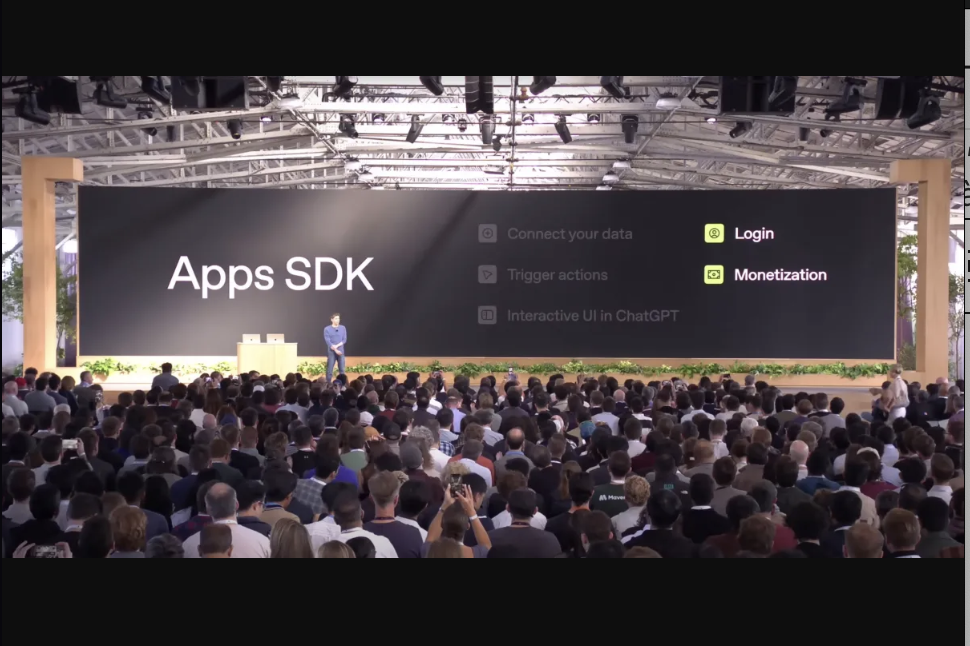
- At Dev Day 2025, OpenAI introduced plans to integrate apps directly into ChatGPT, allowing users to call or discover apps like Spotify, Figma, Uber, Expedia, Instacart, and Target without leaving the ChatGPT window.
- Combined with the Instant Checkout feature launched last week, OpenAI now possesses the entire infrastructure for AI-driven commerce, including:
- An automated payment system through Shopify, Etsy, and Stripe.
- Apps serving as ‘storefronts’ for businesses to build sales interfaces right within ChatGPT.
- This model could turn ChatGPT into an “AI super-mall,” where users find, purchase, and pay for products, while OpenAI earns a percentage from each transaction, similar to the App Store.
- ChatGPT also has a significant advantage due to its user behavior data, helping it recommend products with precision and increasing its influence in the supply chain. According to Ben Thompson, this is the stage where ChatGPT becomes a “super-aggregator”—a powerful layer connecting customers and retailers.
- Initial partners include Uber, Expedia, Thumbtack, Instacart, DoorDash, and Target, showing OpenAI is moving to cover most areas of consumer spending.
- Google has also launched its AP2 protocol for agentic commerce, which allows AI to proactively purchase items or negotiate prices; however, OpenAI’s momentum is stronger.
- Adobe predicts the 2025 holiday shopping season will be “dominated” by AI shopping, while Mastercard calls it the “new competitive arena” for finance.
- However, an open question remains: are users ready to trust an AI to spend money on their behalf? Most have not yet experienced a complete agentic shopping system.
📌 Summary: OpenAI is ushering in a billion-dollar era of AI commerce, turning ChatGPT into a smart platform for sales, payments, and product recommendations. With Instant Checkout and an integrated app ecosystem, OpenAI is not only competing with Google and Anthropic but also challenging Amazon and Walmart. If successful, this model could transform ChatGPT into a “global AI store,” redefining how consumers shop on the internet.


