


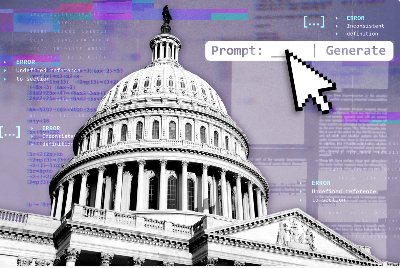
- The US House Office of Legislative Counsel (OLC) is dealing with an increasing number of AI-generated bill drafts, many of which contain errors and poor legal language.
- According to current and former officials, while AI helps members of Congress and advocacy groups generate large amounts of text quickly, it significantly increases the OLC’s workload for review and editing.
- An AI consultant for congressional offices stated that the OLC takes more time to fix AI-generated drafts than to write them from scratch.
- Daniel Schuman, Director of the American Governance Institute, noted that AI is currently not capable of drafting legislation that can be enacted into law.
- Experts warn that errors in AI drafts could lead to long-term legal consequences, such as incorrect legal citations, misused definitions, or court disputes.
- Former OLC head Wade Ballou said AI often misses important legal nuances, such as confusing tax credits, tax deductions, tax exemptions, or subsidies.
- AI might also accidentally exclude Washington D.C. or indigenous tribes from federal programs if the definition of “state” only includes the 50 states.
- Ari Hershowitz, a legal tech expert, warned that AI misciting the United States Code could create thousands of “errors” within the legal system.
- In the last Congress, the OLC, with 61 lawyers and 19 support staff, prepared over 30,000 bill drafts—nearly triple the number of bills actually introduced.
- In just the first 60 days of the current Congress, the OLC received 5,623 requests for legislation, a 72% increase compared to two years ago.
- Experts fear that as the OLC becomes overwhelmed, some members of Congress might bypass the review process and directly introduce AI-generated drafts.
- Some congressional staff noted that using AI is still a sensitive issue, so many do not disclose its use.
- After Representative Anna Paulina Luna submitted a summary generated by Claude, she required staff to more rigorously check all AI-supported content.
- The OLC currently does not use commercial generative AI to draft laws but develops specialized tools like the Comparative Print Suite, which accurately shows how a bill would amend the U.S. Code and returns error messages when uncertain, rather than “hallucinating” like many chatbots.
📌 AI đang làm thay đổi quy trình lập pháp của Mỹ theo hướng vừa tăng tốc vừa gia tăng rủi ro. Các chuyên gia đều đồng ý AI có thể hỗ trợ nghiên cứu và xử lý thông tin, nhưng việc soạn thảo luật vẫn đòi hỏi kiến thức pháp lý, khả năng lựa chọn ngôn ngữ chính xác và hiểu rõ mục tiêu chính sách. Thách thức hiện nay không chỉ là chất lượng của AI mà còn là việc AI giúp tạo ra quá nhiều dự thảo, khiến cơ quan chịu trách nhiệm kiểm soát chất lượng bị quá tải.


