


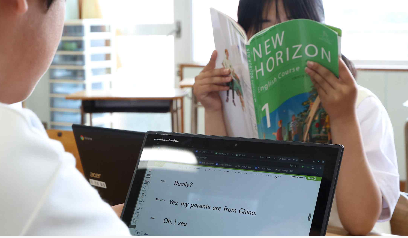
- On October 11, 2026, Nikkei Asia published an opinion article by Kuniyoshi Sakai, a professor of language neuroscience at the University of Tokyo, proposing a ban on AI and digital textbooks in classrooms.
- In June 2026, Japan’s parliament amended the education law, granting digital textbooks the same legal status as printed textbooks and paving the way for wider adoption.
- Sakai warns that poorly regulated digitalization in education could weaken students’ language skills, reading comprehension, memory, and independent thinking.
- A 2025 survey of 1,062 Japanese university students aged 18–29 found that 20% did not have a habit of reading books, newspapers, or magazines, while 10% did not take notes when studying.
- According to the author, students who neither read nor write performed very poorly on a secondary-school-level reading comprehension test.
- Sakai argues that printed books help readers remember the location and structure of information, whereas electronic books may weaken their spatial orientation within content.
- He maintains that constantly accessing links, QR codes, and online content makes it difficult for learners to sustain concentration and determine the scope of knowledge they need to master.
- The author criticizes generative AI for potentially encouraging learners to depend on ready-made answers, reducing opportunities to practise expression and creativity.
- The University of California, Berkeley School of Law is cited as an example of restricting AI in most graded exams and written assignments, including outlining and language editing.
- Sakai argues that even using AI to suggest ideas or correct sentences can reduce opportunities to develop writing skills.
- He warns that a new divide could emerge between people who rely on AI to the point that their thinking abilities deteriorate and those who preserve their capacity for independent problem-solving.
- Based on these arguments, the author proposes a complete ban on AI in education to protect the development of intellectual autonomy among future generations.
📌 The opinion article raises questions about the long-term effects of AI and digitalization on cognitive abilities. A survey of 1,062 Japanese university students reveals concerning signs regarding reading and writing habits. However, this association is not sufficient to prove that technology directly causes a decline in ability. A complete ban on AI is the author’s position, which differs from approaches that advocate controlled integration. The core educational challenge is to ensure that learners develop foundational knowledge and independent thinking before using AI as a support tool.