



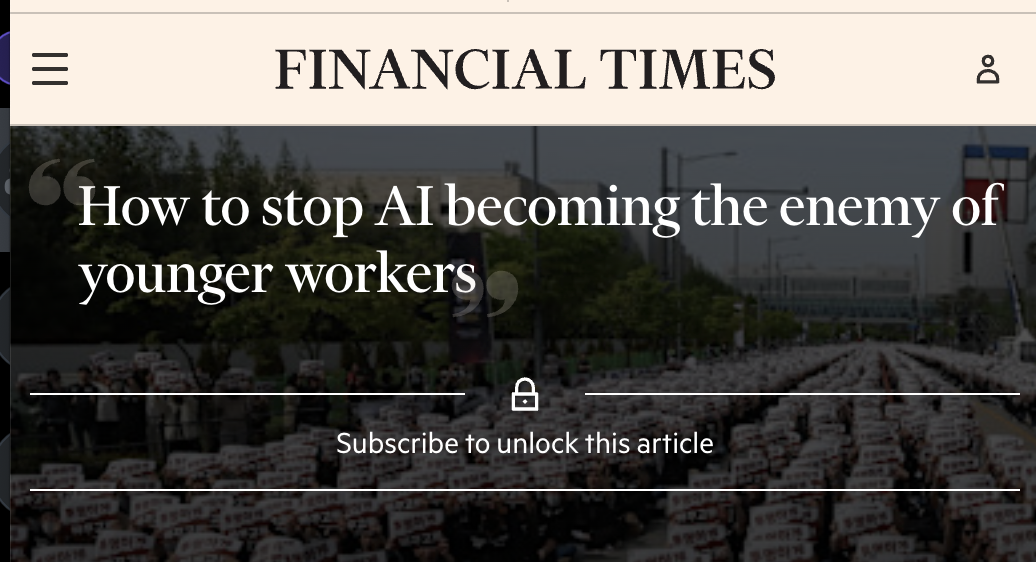
- The article analyzes the paradox in South Korea where the nation benefits heavily from the AI wave, yet young workers are experiencing distinct negative impacts on the job market.
- Samsung Electronics and SK Hynix have both surpassed a 1.000 trillion USD market capitalization due to the surging global demand for AI chips and data centers. Samsung employees even reached a profit-sharing agreement, with an average bonus of nearly 400,000 USD for workers in the memory chip division.
- According to a survey by the Pew Research Center, South Korea is one of the few major nations where the number of people optimistic about AI outweighs those who are pessimistic.
- However, the benefits of AI are primarily concentrated among workers with stable employment at large conglomerates, while employees of subcontractors and small and medium-sized enterprises (SMEs) still receive lower wages and fewer protections.
- A study by the Bank of Korea shows that over the past three years, the country lost 211,000 jobs among the 15–29 age group, while jobs for people in their 50s increased by 209,000.
- The decline in youth employment is particularly severe in industries heavily impacted by AI, with computer programming and systems integration down by 11.2%, publishing down by 20.4%, professional services down by 8.8%, and information services down by 23.8%.
- Researchers call this phenomenon “seniority-biased technological change,” where AI easily replaces tasks based on standardized knowledge typically handled by entry-level employees, while supporting tasks that require accumulated experience, interpersonal skills, and the tacit knowledge of senior workers.
- A similar trend is also beginning to emerge in the US, especially in the software development industry, but the extent in South Korea is considered more pronounced due to a labor market structure polarized between “insiders” with stable jobs and “outsiders” who struggle to access opportunities.
- According to the Korea Labor Institute, large enterprises in South Korea fiercely protect existing workers. When adopting AI, businesses do not lay off incumbent employees but instead cut back on new hiring, causing most of the adjustment burden to fall on young job seekers.
- The OECD warned as early as 2022 that South Korea’s large conglomerates are increasingly utilizing more capital, technology, and outsourcing rather than creating more jobs. Meanwhile, many graduates continue to wait for opportunities at large conglomerates or the public sector instead of working at SMEs, leaving these smaller firms short of high-quality manpower and struggling to boost productivity.
- The South Korean government is establishing a “Future Response Fund” to utilize the increased fiscal revenue from the semiconductor industry to invest in major projects, reduce inequality, and support employment for people in their 20s and 30s.
- One proposed solution is to subsidize businesses that hire and train young workers during the initial phase when they have not yet generated significant economic value. Concurrently, it aims to expand training, capital, and social security support for freelancers and encourage youth to launch AI-driven startups to create new business models.
- 📌 Conclusion: AI does not impact all worker groups equally. While South Korean semiconductor conglomerates achieved market capitalizations of over 1.000 trillion USD and employees received average bonuses of nearly 400,000 USD, the economy lost 211,000 jobs for people aged 15–29 in just three years. The case of South Korea serves as a warning that without appropriate training, recruitment, and startup support policies, AI could widen the gap between young workers and experienced labor, while further deepening inequality in the job market.


